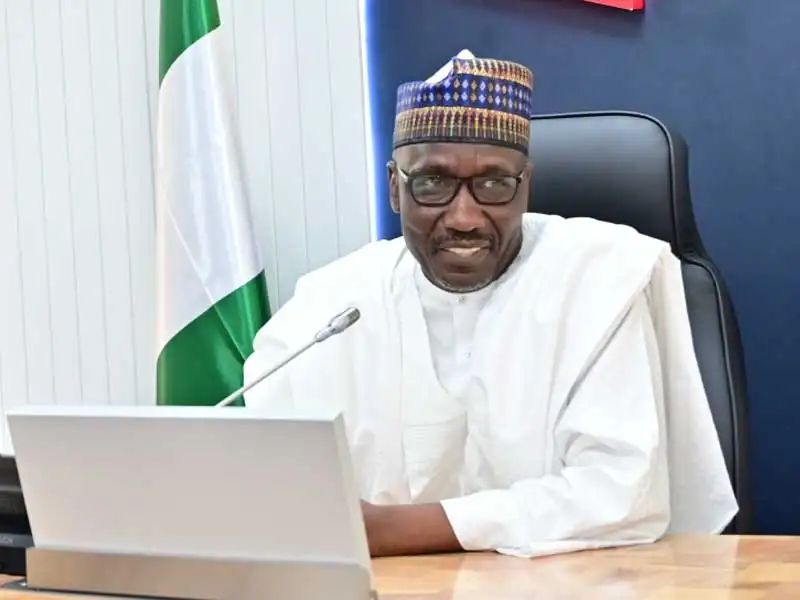
The Minister of State for Finance, Dr Doris Uzoka-Anite, has stated that Nigeria’s goal of becoming a $1 trillion economy by 2030, set by President Bola Tinubu, cannot be achieved by government efforts alone. She spoke at the Annual General Meeting AGM of the Finance Correspondents Association of Nigeria FICAN in Abuja, highlighting the importance of investor confidence, private sector participation, and citizen engagement.
Dr Uzoka-Anite said, “President Tinubu’s $1 trillion economy will not be built through the efforts of government alone. It will be built through the confidence of investors who trust our institutions, the productivity of our entrepreneurs who can access capital and markets, the ss of young Nigerians, and informed engagement of citizens who understand what their country is trying to do and why.”
With Nigeria’s GDP currently at approximately $375 billion, she acknowledged that reaching $1 trillion is ambitious but achievable with strategic planning and collaboration.
The Managing Director of the Nigeria Sovereign Investment Authority NSIA, Mr Aminu Umar-Sadiq, revealed that the organisation has grown its capital from $1 billion to $3 billion and is supporting major infrastructure projects such as the Second Niger Bridge, Lagos-Ibadan Expressway, and parts of the Abuja-Kano Highway. NSIA is also investing in renewable energy and health infrastructure, including cancer diagnostic and treatment centres.
Similarly, the Managing Director of the Nigerian Export-Import Bank NEXIM, Mr Abubakar Bello, highlighted efforts to empower exporters, increase foreign exce earnings, and leverage the African Continental Free Trade Area AfCFTA to expand regional trade and reduce logistics costs.
The Director-General of the Bureau of Public Enterprises BPE, Mr Ayodeji Gbeleyi, added that achieving the $1 trillion target requires structural reforms, private sector mobilisation, institutional strengthening, and productivity expansion. He reported that BPE contributed N185 billion to the treasury in 2025 and aims to raise N189.1 billion this year from 15 strategic projects.










Leave a comment