
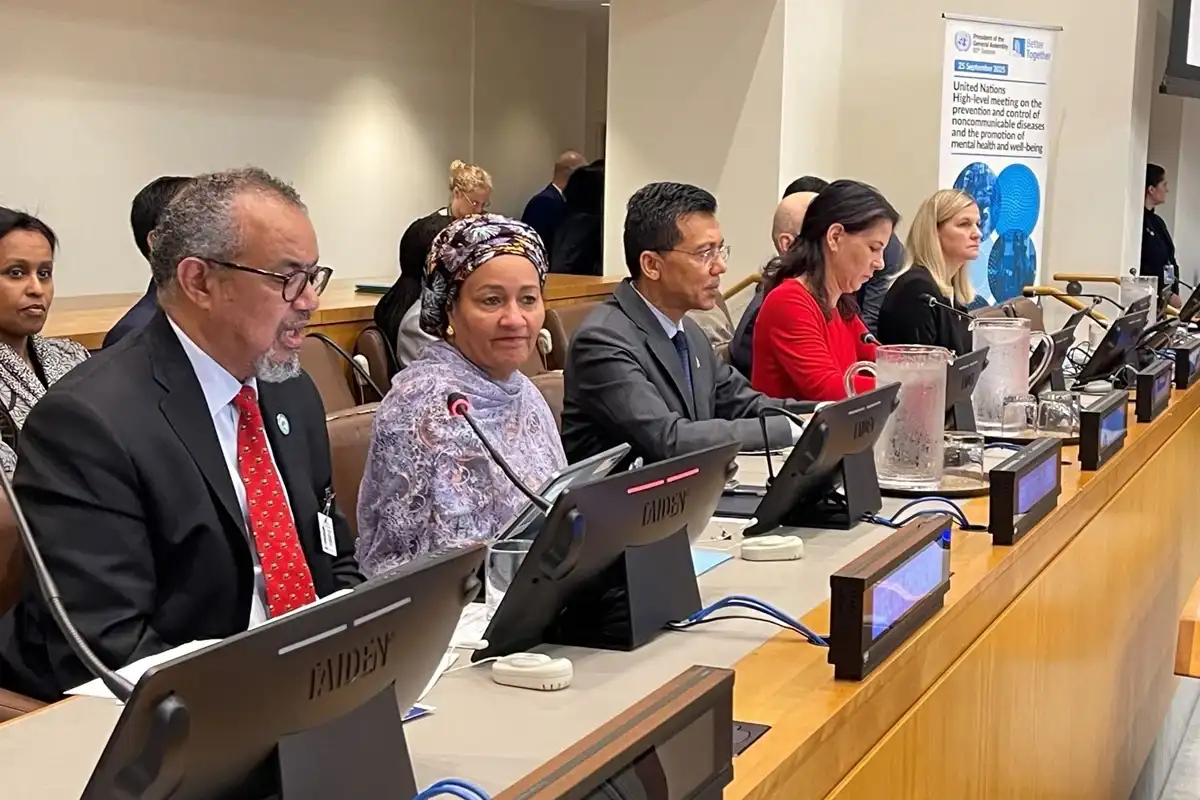
In a groundbreaking move, world leaders have adopted a comprehensive global declaration to tackle noncommunicable diseases (NCDs) and mental health challenges during the Eightieth United Nations General Assembly on December 16, 2025. This landmark initiative marks the first integrated approach addressing chronic illnesses alongside mental health, acknowledging their significant impact on global health and economies.
Titled “Equity and integration: transforming lives and livelihoods through leadership and action on noncommunicable diseases and the promotion of mental health and well-being,” the declaration sets ambitious 2030 targets. Key objectives include reducing tobacco use by 150 million people, controlling hypertension for an additional 150 million, and expanding mental health care access to another 150 million. NCDs currently cause 18 million premature deaths annually, while mental health conditions affect over a billion globally.
Specific process targets for national systems by 2030 include:
– 80% of countries implementing relevant policies.
– 80% of primary health care facilities providing essential medicines for NCDs and mental health.
– 60% of countries having financial protection policies for essential services.
– 80% of countries with multisectoral national plans for NCDs and mental health.
– 80% of countries having robust monitoring systems.
WHO Director-General Dr. Tedros Adhanom Ghebreyesus highlighted the declaration’s significance, emphasizing the commitment of member states to safeguard public health. The declaration also addresses issues such as oral and lung health, childhood cancers, and environmental determinants, including air pollution and the digital risks associated with social media.
A “whole-of-government” and “whole-of-society” approach is essential, engaging multiple stakeholders to secure adequate funding and foster international partnerships. The UN Secretary-General will track progress towards these targets by 2030, with support from WHO and UN agencies to help member states implement these commitments effectively.










Is this agreement just a show for global leaders, or will it actually make a difference in tackling noncommunicable diseases and mental health issues? 🤔
This agreement sounds promising, but will global leaders actually follow through? Lets hold them accountable!
Im not convinced that global leaders endorsing an agreement will actually make a difference. Lets see some concrete action!
Im not convinced global leaders will actually follow through on this agreement. It all sounds too good to be true.
Im not convinced global leaders will follow through on this agreement. Promises are easy, action is what matters. Lets see!
Interesting read, but do global leaders really have the power to make a significant impact on noncommunicable diseases and mental health worldwide?
Should mental health be prioritized over noncommunicable diseases in global agreements? 🤔 Lets discuss!
Isnt it about time global leaders prioritize mental health & noncommunicable diseases? Finally some progress!