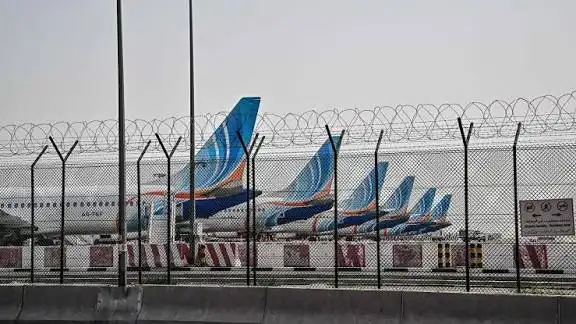
Widespread flight suspensions across the Middle East are disrupting global air traffic and placing renewed strain on international trade flows as airlines respond to escalating regional tensions. Carriers have halted or rerouted services through key transit corridors, citing safety concerns and regulatory advisories issued by national aviation authorities.
Airspace closures over parts of Iran, Iraq and neighboring Gulf states have significantly altered long haul routes connecting Europe, Asia and Africa. Aviation experts note that many intercontinental flights rely on this corridor for efficient passage, meaning restrictions have forced aircraft to take longer alternative paths. The result has been extended flight times, higher fuel consumption and cascading delays across major global hubs.
Passenger services have been particularly affected on routes linking South Asia and Europe, as well as connections to North America. Airlines have introduced temporary suspensions to select destinations while reviewing operational risk assessments. In several cases, aircraft were diverted mid journey after updated advisories were issued, creating logistical challenges for carriers and travelers alike.
The disruption extends beyond passenger travel. Air cargo operations, which form a critical component of global supply chains, have also encountered scheduling adjustments. Time sensitive shipments, including pharmaceuticals and high value electronics, may face delivery delays as carriers revise routing plans. Logistics analysts warn that prolonged restrictions could increase transportation costs and reduce supply chain efficiency.
Insurance premiums for flights traversing high risk zones have reportedly risen, further adding to operational expenses. Aviation authorities continue to coordinate through international safety frameworks to share intelligence and guidance. Airlines are required to continuously evaluate risk levels before authorizing flights over sensitive areas.
Travelers have been advised to monitor airline communications closely and prepare for potential schedule changes. Many carriers have offered flexible rebooking options or travel waivers to accommodate affected passengers. However, limited capacity on alternative routes has constrained immediate solutions.
Industry observers say the current disruption underscores the vulnerability of global aviation networks to geopolitical instability. The interconnected nature of modern air travel means that regional conflicts can have far reaching consequences well beyond their immediate geographic boundaries.
As tensions persist, airlines and regulators are expected to maintain heightened vigilance while seeking ways to restore normal operations once conditions permit. In the meantime, global trade and mobility remain closely tied to developments on the ground in the Middle East.













Leave a comment