Olena Janchuk begins another day of freezing isolation inside her high rise apartment in Kyiv. The former kindergarten teacher suffers from severe rheumatoid arthritis and has been effectively trapped for weeks on the nineteenth floor of her tower block forced to face 650 steps whenever elevators stop working.
Frequent blackouts caused by Russia’s ardment of power plants and transmission lines have turned functioning elevators into a rare luxury. With January temperatures dropping to minus ten degrees Celsius frost permanently lines the inside of Janchuk’s windows white patterns spreading across the glass each morning.
Inside the apartment the fifty three year old huddles beside a makeshift fireplace made of candles placed beneath stacked bricks designed to absorb heat and release it slowly. USB charging cables trail across the floor from overloaded power strips and her electric blanket is connected to a power bank saved for the coldest hours.
“When there’s no light and heat for seventeen and a half hours you have to come up with soing,” Janchuk said. “The bricks work best in a small room so we stay in there.”
During the day the family moves between rooms that catch the winter sun repurposing each space according to the blackout schedule. At night they keep heavy clothes on indoors as the apartment rapidly cools without central heating.
Kyiv a city of roughly three million people is dominated by tower blocks many built during the Soviet era. In this fourth winter of war electricity has become a rationed necessity rather than a given.
Residents now plan daily life around electricity schedules deciding when to cook shower charge phones or run washing machines. Food is chosen for shelf life water is filtered into bottles and stored in buckets. Small camping gas burners are used to heat soup or tea when power cuts out.
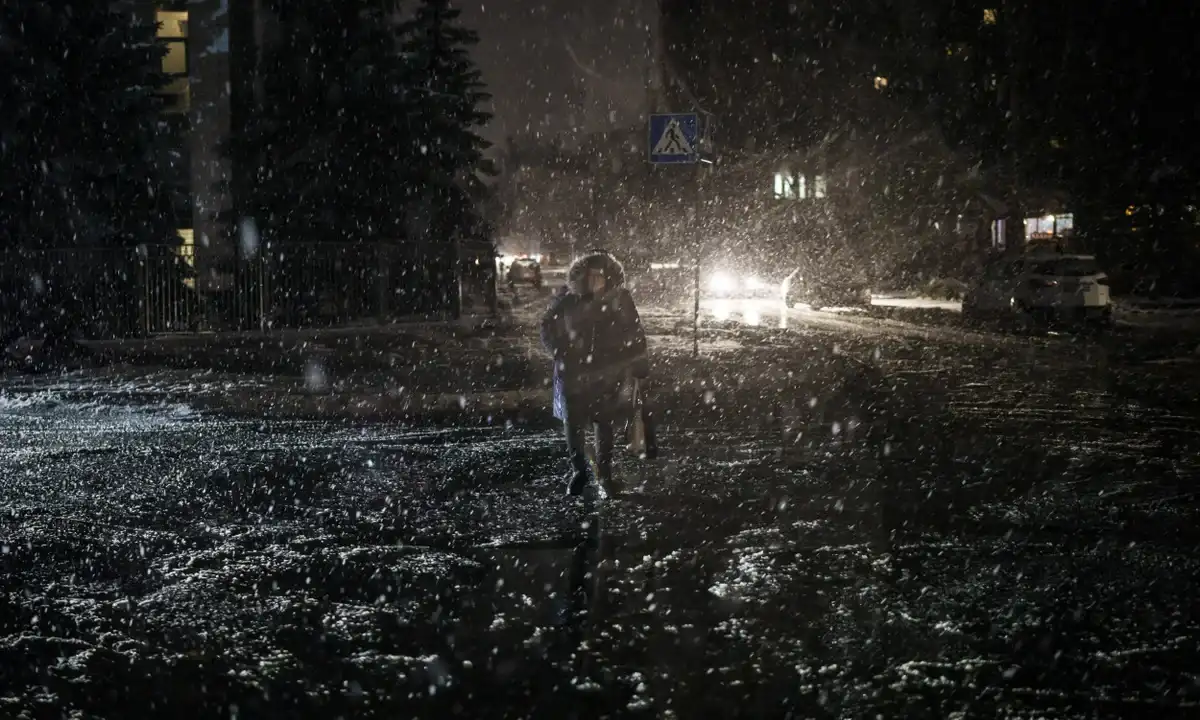
Sleep is often broken by air raid sirens and the need to use electricity during narrow off peak windows. Across the snow covered city sel generators hum along commercial streets. Shoppers browse store aisles using phone flashlights and bars glow softly by candlelight.
Mobile apps alert residents when electricity briefly returns often for only a few hours at a time enough to reset household routines.
Janchuk’s twenty two story building stands close to a power station allowing residents to witness missile and drone strikes firsthand flashes lighting up the night sky. During blackouts people climb stairwells in darkness phone lights reflecting off concrete steps accompanied by the sounds of children and barking dogs. Sometimes neighbors leave plastic bags with cookies or water inside elevators for anyone trapped when power fails mid ride.
Janchuk’s husband works most of the day and brings home groceries in the evening while her seventy two year old mother Lyudmila Bachurina manages household chores.
“It’s cold but we manage,” Bachurina said holding a square USB charged flashlight she recently mounted on the wall. “When the lights come on I start the washing machine fill water bottles cook food charge power banks and run around the kitchen and the house.”













Do you think the article adequately captures the resilience of the people in Kyiv during this ongoing conflict? Lets discuss!
I wonder if the article truly captures the daily struggles of those living in war-torn Kyiv. Its important to shed light on their experiences.
This article really made me think about the resilience of the people in Kyiv. War is such a harsh reality.
I cant believe the resilience of the people in Kyiv enduring such harsh conditions. Its a reminder of the strength of the human spirit.
I cant imagine living in such darkness and chaos. How do they find hope and keep going? Its truly inspiring.
I cant believe the resilience of the people in Kyiv. War in winter? Thats unimaginable. My heart goes out to them.
Wow, can you believe the resilience of the people in Kyiv? War during winter must be unbearable. Stay strong, Ukraine 💪🇺🇦
Wow, can we appreciate the resilience of the people in Kyiv during these tough times? Their strength is truly inspiring.
I cant believe the resilience of the people in Kyiv! War during winter sounds unbearable. Lets send them some warmth and love.