
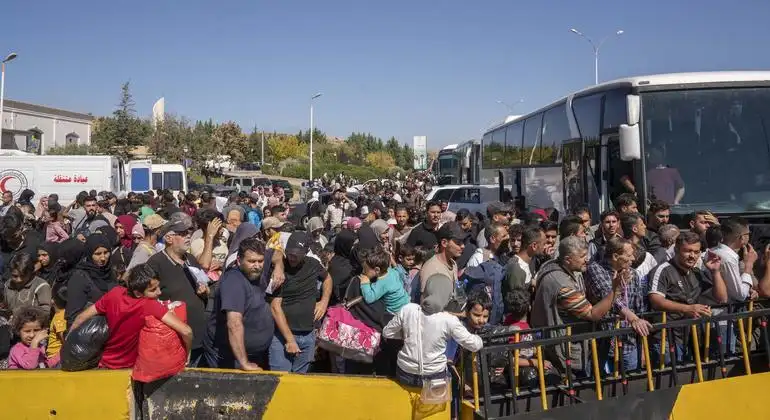
Lebanon is facing a deepening humanitarian crisis as ongoing conflict continues to drive large scale displacement across the country, with more than one million people reportedly forced from their homes. Aid organizations describe the situation as increasingly severe, with communities struggling to absorb the influx of displaced families while essential services face mounting pressure and limited resources.
Local authorities have acknowledged the growing challenge, noting that infrastructure in several regions is under strain due to the rapid population shifts. Shelters are reaching capacity, and many displaced individuals are seeking refuge in schools, public buildings, and informal settlements. Officials warn that without sustained support, conditions could deteriorate further, particularly in areas already facing economic hardship.
Humanitarian groups are working to deliver food, water, and medical assistance, but access remains a significant obstacle in some affected zones. Relief agencies report that logistical difficulties and security concerns are hindering operations, making it harder to reach vulnerable populations. Despite these challenges, efforts continue to scale up, with international partners coordinating responses to address urgent needs.
The displacement crisis is also placing additional pressure on Lebanon’s fragile economy, which has been grappling with prolonged financial difficulties. Analysts highlight that the sudden increase in demand for basic goods and services is contributing to rising costs and supply shortages. Businesses in host communities are experiencing mixed effects, with some benefiting from increased activity while others struggle to cope.
Education and healthcare systems are among the sectors most affected, as institutions attempt to accommodate both residents and displaced individuals. Schools have been repurposed as temporary shelters, disrupting learning for thousands of students. Medical facilities are operating under heightened demand, with staff working extended hours to manage the surge in patients requiring urgent care and support.
Regional and international actors have expressed concern over the scale of the displacement and its potential long term consequences. Calls for increased funding and coordinated action have grown louder, with emphasis on both immediate relief and sustainable solutions. Diplomatic efforts are also underway, aiming to address the underlying conflict and reduce the factors driving population movements.
Observers warn that without a significant de escalation in hostilities, the displacement crisis could continue to expand, placing further strain on Lebanon’s social and economic fabric. The resilience of communities is being tested, as both displaced individuals and host populations navigate an increasingly uncertain environment shaped by ongoing conflict and limited resources.






Leave a comment