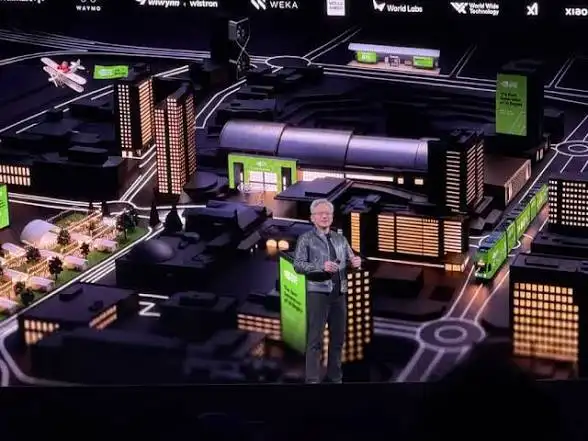
Leaders across the global technology sector are closely monitoring developments from Nvidia, as its chief executive Jensen Huang continues to shape the direction of artificial intelligence innovation. The company has emerged as a central player in the AI ecosystem, largely due to its dominance in advanced semiconductor design and its role in powering machine learning systems. Recent announcements and public appearances by Huang have drawn significant attention from investors, developers, and policymakers alike.
Nvidia’s influence stems from its leadership in producing graphics processing units that are widely used in AI training and deployment. These chips are essential for handling the massive computational workloads required by modern AI models, including those used in natural language processing, image recognition, and autonomous systems. As demand for AI capabilities continues to grow, Nvidia’s position in the market has become increasingly strategic, with its technologies underpinning a wide range of applications.
Industry observers note that Huang’s vision extends beyond hardware, encompassing a broader ecosystem that includes software platforms and development tools. Nvidia has been investing in integrated solutions designed to make AI more accessible to businesses and researchers. This approach aims to create a comprehensive environment where users can develop, test, and deploy AI systems efficiently, further reinforcing the company’s competitive advantage.
The heightened focus on Nvidia also reflects broader trends within the technology sector, where companies are racing to integrate AI into their products and services. Major firms are forming partnerships, expanding research initiatives, and increasing capital expenditures to keep pace with rapid advancements. Governments are also paying c attention, recognizing the strategic importance of AI in areas such as national security, economic growth, and technological sovereignty.
Despite the optimism surrounding AI, challenges remain, including concerns about ethical use, data privacy, and the concentration of power within a few dominant companies. Analysts suggest that how Nvidia navigates these issues will play a critical role in shaping the future of the industry. As Huang continues to articulate the company’s vision, stakeholders across the technology landscape will be watching closely to assess the implications for innovation, competition, and global economic development.













Leave a comment