
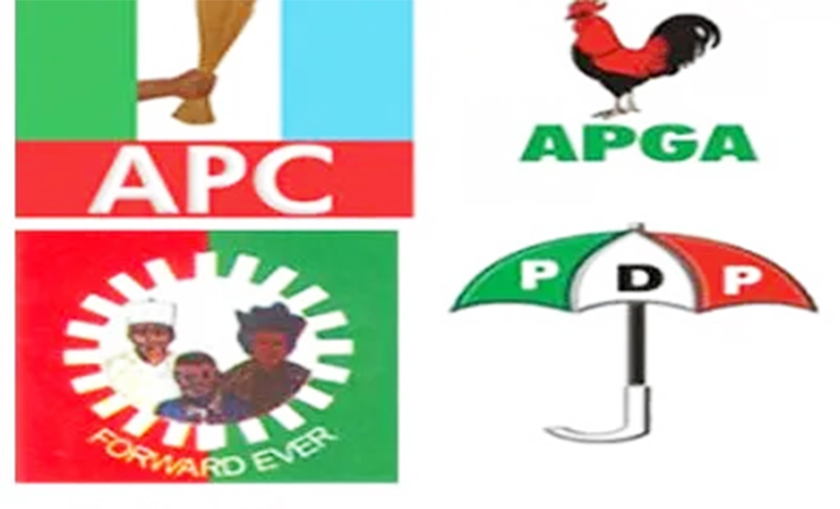
As Nigeria approaches the 2027 presidential elections, the nation’s political landscape is undergoing significant transformations, with parties adopting various strategies to influence the future direction of the country.
The ruling All Progressives Congress (APC) has solidified its position by endorsing President Bola Tinubu for re-election. At a summit in Abuja on May 22, 2025, the APC declared Tinubu as its sole candidate for the upcoming election, highlighting his economic reforms, including the removal of fuel subsis and currency liberalization. While these measures have garnered international praise, they have also led to domestic challenges, such as a severe cost-of-living crisis. Despite criticisms over unresolved security issues, the APC’s endorsement underscores its confidence in Tinubu’s leadership and the party’s dominance. (reuters.com)
In contrast, opposition parties are striving to present a unified front to challenge the APC’s stronghold. A coalition of civil society organizations has recommended that opposition parties unite to strengthen Nigeria’s democratic process. This recommendation emerged from a National Conference in Abuja, emphasizing the need for a cohesive opposition to ensure checks and balances, promote accountability, and foster healthy political discourse. The coalition also advocates for the Independent National Electoral Commission (INEC) to allow the registration of new political parties and to embrace technology in its operations. (thetimes.com.ng)
However, the path to unity is fraught with challenges. Personal ambitions among key figures threaten to undermine the coalition’s effectiveness. Notably, former Vice President Atiku Abubakar, Labour Party leader Peter Obi, and former APC members like Nasir El-Rufai have expressed presidential aspirations, potentially leading to disagreements within the coalition. El-Rufai’s recent defection from the APC to the Social Democratic Party (SDP) exemplifies the fluid nature of political affiliations and the complexities of forming a unified opposition. (allafrica.com, en.wikipedia.org)
The fragmentation within opposition parties has been further exacerbated by significant defections to the ruling APC. Over 51 lawmakers from the Labour Party, New Nigeria People’s Party (NNPP), and All Progressives Grand Alliance (APGA) have joined the APC, weakening the opposition’s position and raising concerns about the potential emergence of a one-party state. Analysts suggest that if the opposition remains divided, the APC could further consolidate power in the 2027 elections. (businessday.ng)
In response to these dynamics, the Conference of Nigerian Political Parties (CNPP) has called for the creation of additional states to address regional imbalances and promote equity. The CNPP proposes that each of Nigeria’s six geopolitical zones should have seven states, advocating for the elishment of new states in the South-West, North-East, South-South, and South-East regions. This initiative aims to ensure a more equitable distribution of resources and opportunities across the country. (gazettengr.com)
As the 2027 elections draw nearer, Nigeria’s political parties are navigating a complex landscape of alliances, defections, and strategic realignments. The effectiveness of these strategies will significantly influence the nation’s democratic trajectory and its future governance.





I think the article missed the mark on the impact of social media in shaping Nigerias political landscape. Its a major oversight!
I disagree with the articles claim that Nigerias political parties are shaping the future. It seems more like a chaotic mess to me!
I think the article missed the mark on addressing the impact of youth involvement in shaping Nigerias political future. Lets not overlook this crucial factor!
I think the article missed the mark on the role of grassroots movements in shaping Nigerias political future. Its not all about the parties!
I disagree with the articles view that political parties in Nigeria are shaping the future. Its all just a facade!
I believe the article missed out on discussing the impact of social media on Nigerian politics. Its a key factor shaping the future!
I really think the article overlooked the impact of social media on shaping Nigerian politics. Its a game-cer!
Interesting read, but I wonder if these strategies will actually lead to positive ce or just more political games.