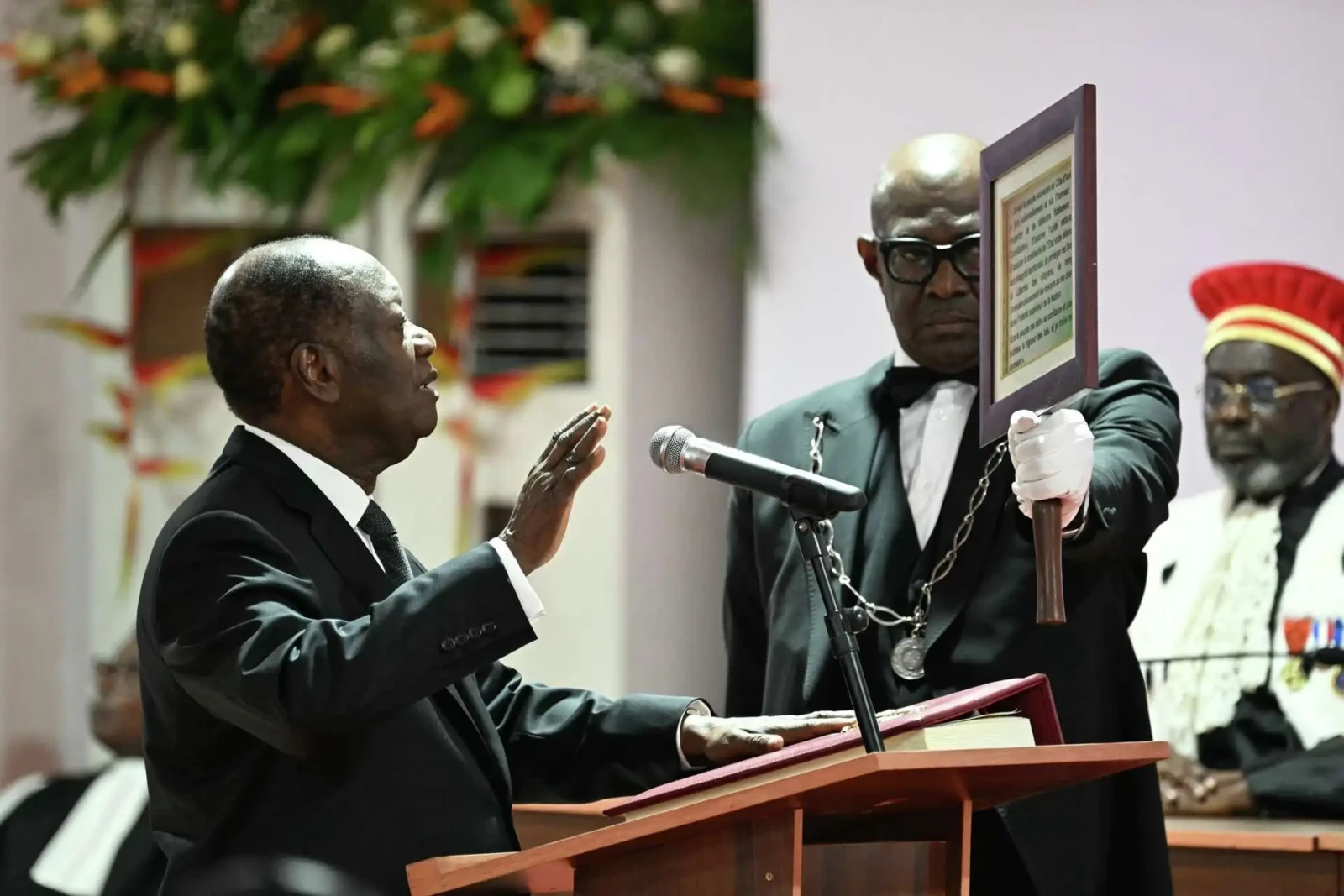
Ivory Coast’s President Alassane Ouattara was sworn in for a fourth term on December 8, 2025, after winning the controversial election on October 25, where he received 89.77% of the votes. The election was characterized by low voter turnout and the exclusion of significant opposition candidates, leading to unrest that resulted in at least 11 deaths and over 1,650 arrests.
The inauguration ceremony in Abidjan highlighted regional support, with 11 African heads of state in attendance. While U.S. officials refrained from criticizing the electoral process, they labeled Ivory Coast as politically le and economically growing. Ouattara first took office in 2010 after defeating Laurent Gbagbo in a disputed election. He implemented a constitutional amendment in 2016 that reset presidential term limits, enabling his candidacies in 2020 and 2025—moves that faced opposition.
Supporters commend Ouattara for rejuvenating the economy in the world’s leading cocoa producer, whereas critics argue he has increased authoritarianism. The election and inauguration have caused significant contention, with opposition figures and international observers expressing concerns about the integrity of the democratic process and the political environment in Ivory Coast.
As discussions about the nation’s governance and international relations continue, the situation remains fluid, reflecting the broader challenges facing Ivory Coast in maintaining ility and addressing the grievances of diverse political stakeholders.









Do you think Ouattaras fourth term will bring ility or more unrest to Ivory Coast? Lets discuss!
I find it hard to believe Ouattaras victory was legitimate. The election seemed fishy to me. What do you guys think?
Does anyone else find it strange how long some leaders stay in power? Four terms seems excessive, no? 🤔
Do you think the inauguration is legitimate or should the election be re-evaluated? Curious to hear everyones thoughts.
Im not convinced Ouattaras fourth term is legitimate. The election was disputed, raising doubts about his presidency. Thoughts?