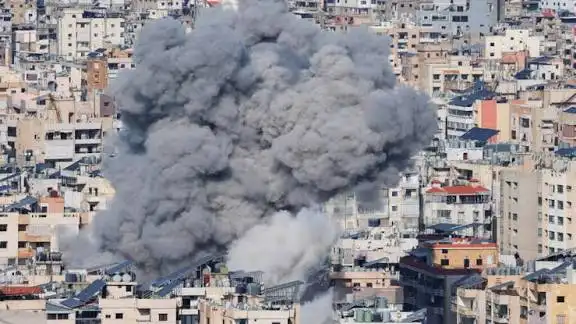
Iran launched a broader wave of missile and drone s across several Gulf countries, marking a significant escalation in tensions across the Middle East and raising fears that the conflict between Iran and Israel could transform into a wider regional confrontation. Officials and military sources in the Gulf confirmed that several countries including Saudi Arabia, Kuwait, and Bahrain activated air defense systems overnight as multiple projectiles and unmanned aerial vehicles were detected approaching their airspace. The s represent one of the most geographically widespread incidents since the conflict began intensifying earlier this year.
Security officials in Saudi Arabia reported that radar systems detected several ballistic missile launches originating from Iranian territory and nearby allied militia controlled regions. Air defense units moved quickly to intercept incoming threats, while military bases across the kingdom were placed on heightened alert. Regional monitoring groups said the s appeared coordinated and involved both long range missiles and smaller drone aircraft designed to overwhelm defensive systems. Although authorities have not released full damage assessments, early reports indicate that several projectiles were intercepted before reaching strategic infrastructure.
Kuwait and Bahrain also confirmed that their air defense forces responded to aerial threats during the same time period. Officials in both countries reported that warning sirens were activated in several urban areas while military command centers assessed incoming projectiles. Residents described hearing explosions in the night sky as interceptors attempted to destroy approaching drones and missiles. Governments in the region urged the public to remain calm while emphasizing that defensive measures were successfully activated to protect civilian areas and critical facilities.
Military analysts believe the s represent an attempt by Iran to widen the strategic pressure across the Gulf and potentially disrupt countries viewed as security partners of the United States and Israel. Experts noted that Gulf states host several major military installations and energy facilities that play central roles in global energy supply and regional security architecture. By targeting multiple countries simultaneously, Iran may be signaling that the ongoing conflict will not remain limited to Israeli territory.
The escalation has already triggered urgent diplomatic consultations among Gulf Cooperation Council members as well as international allies. Governments across the region are reviewing emergency response plans and increasing surveillance over shipping lanes, energy infrastructure, and military bases. Aviation authorities are also closely monitoring airspace conditions as airlines assess the potential risks to civilian flights operating through the Gulf corridor.
Global leaders have expressed growing concern that the expanding scope of s could deilize one of the world’s most strategically important regions. The Gulf remains a vital hub for oil exports and international trade routes, and any sustained military escalation could have far reaching consequences for global markets and geopolitical ility. Security experts warn that if missile and drone exces continue to expand geographically, the Middle East could enter a new phase of prolonged regional conflict.










Leave a comment