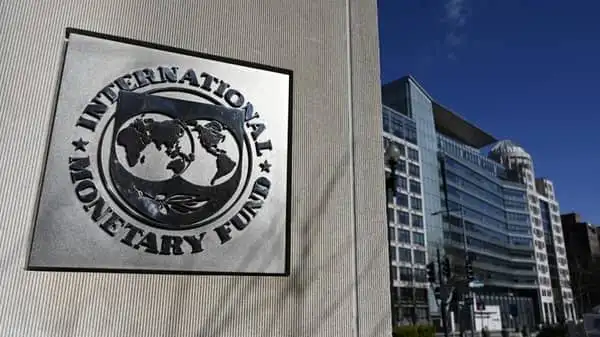
The International Monetary Fund has demanded amendments to a draft rescue law intended to pull Lebanon out of its worst financial crisis on record and restore access to savings frozen for nearly six years Prime Minister Nawaf Salam said on Friday.
The proposed financial gap law is a central pillar of a broader reform package required by the IMF as a condition for unlocking international funding. The legislation seeks to define how losses from Lebanon’s 2019 financial collapse are distributed among the state the central bank commercial banks and depositors.
Speaking to Reuters on the sidelines of the World Economic Forum in Davos Salam said the IMF wants clearer provisions on the hierarchy of claims which would determine how losses are allocated.
“We want to engage with the IMF We want to improve This is a draft law” Salam said adding that discussions with the Fund were constructive. “They wanted the hierarchy of claims to be clearer The talks are all positive.”
Lebanon’s government estimated losses from the financial collapse at around 70 billion dollars in 2022 though economists now believe the figure has grown significantly. The crisis has wiped out much of the value of deposits locked the banking system and devastated the economy.
Salam stressed that Lebanon remains committed to securing a long delayed IMF program but warned that time is running out. The country has already been placed on an international financial grey list and risks slipping onto a blacklist if reforms stall.
“We want an IMF program and we want to continue our discussions until we get there” he said. “International pressure is real The longer we delay the more people’s money will evaporate.”
The draft law approved by the cabinet in December is currently under review in parliament. It aims to provide depositors with a guaranteed path to recovering funds revive bank lending and restore confidence in a system that has left nearly one million accounts frozen.
Under the proposed roadmap depositors would be repaid up to 100000 dollars over four years starting with smaller accounts. The plan also includes forensic audits to determine the scale of losses and assign responsibility.
Finance Minister Yassine Jaber who is leading the reform effort alongside Salam said the legislation is essential to rescuing a hollowed out banking sector and preventing further economic paralysis.
“The goal is to give depositors clarity after years of uncertainty and to end a system that has damaged Lebanon’s international standing” Jaber told Reuters.
He described the draft law as part of a broader reckoning marking the first time a Lebanese government has confronted the simultaneous collapse of the banking sector the central bank and the state treasury.
Repeated reform attempts have been derailed by political resistance and private vested interests over the past six years. Jaber said the responsibility now lies with lawmakers to act.
Failure to do so he warned would leave Lebanon stuck in a prolonged crisis with no clear exit. “Lebanon has become a cash economy” Jaber said. “The real question is whether we want to remain on the grey list or sleepwalk into the black list.”







Do you think the IMFs proposed ces will actually help Lebanons economic crisis, or just make things more complicated? 🤔
Do you think IMF conditions for Lebanon bailout are fair, or too strict? Lets discuss! 💭🇱🇧 #LebanonCrisis #IMFDebate
Do you think the IMFs proposed ces will actually help Lebanon, or is it just another band-aid solution? Lets discuss!
IMF pushing for ces in Lebanon bailout law? About time! Hopefully, it leads to real progress.
Do you think the IMFs proposed ces will actually help Lebanons economy, or just prolong the crisis? Curious to hear your thoughts!
Do you think IMF conditions will actually help Lebanons economy, or just deepen the crisis? 🤔 Lets discuss!
Why should the IMF dictate Lebanons rescue plan? Let the country decide its own fate! #LebanonRescue #IMFIntervention
Why does the IMF always seem to want countries to ce their laws before giving them a bailout? Seems fishy to me.