
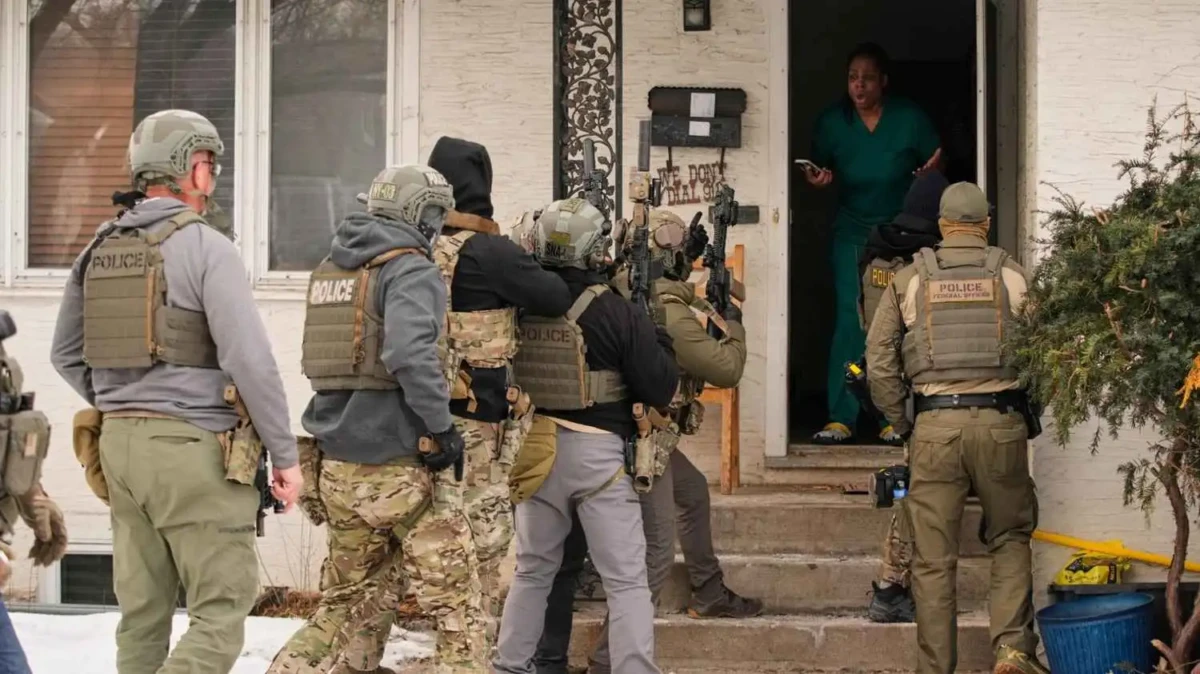
U.S. federal immigration officers are asserting broader authority to forcibly enter private homes without a judge’s warrant, according to reports citing an internal Immigration and Customs Enforcement (ICE) memo revealed on Wednesday.
The memo authorizes ICE officers to use force to enter a residence based solely on an administrative warrant to arrest someone with a final order of removal. This marks a significant reversal of long-standing guidance designed to respect constitutional limits on government searches, and has raised alarm among civil liberties and immigrant rights groups.
For years, advocacy organizations, legal aid groups, and local governments have advised immigrants not to open their doors to immigration agents unless presented with a warrant signed by a judge. That guidance is rooted in Supreme Court rulings that generally prohibit law enforcement from entering a home without judicial approval. Campaigners say the new ICE directive directly undercuts those protections and conflicts with Fourth Amendment safeguards against unreasonable searches.
The reported policy shift comes as President Donald Trump’s administration dramatically expands immigration enforcement nationwide, deploying thousands of officers as part of a mass deportation campaign.
According to a whistleblower complaint, the memo has not been widely circulated within ICE but has been used to train new officers. Recruits and officers still in training are reportedly being instructed to follow the memo’s guidance, even where it contradicts existing written training materials.
Responding to the reports, Homeland Security spokeswoman Tricia McLaughlin said in a statement to the Associated Press that individuals served with administrative warrants have already received “full due process and a final order of removal.” She added that officers issuing such warrants had also elished probable cause for the arrest.
The development has intensified debate over the balance between immigration enforcement and constitutional rights, with critics warning that the policy could erode long-standing legal protections within private homes.













Can you believe ICE can just barge into homes without warrants now? Thats some serious invasion of privacy! Whats next, surveillance drones in our living rooms? 🤯
I cant believe ICE has more power to enter homes without warrants. This is a serious invasion of privacy!
This ICE memo on warrantless home entry is concerning. Are we sacrificing privacy for security? Lets discuss!
Isnt this a major overreach of power? Where does it end? Privacy invasion at its finest! Just my two cents.
This ICE memo is a slippery slope. Who decides what constitutes a valid reason for warrantless home entry? Big Brother vibes.
This is a dangerous overreach of power by ICE. Its a clear violation of privacy rights and needs to be challenged.
Is this the beginning of Big Brother in our own homes? Scary stuff. Time to protect our privacy rights!
This ICE memo is a slippery slope! Are we sacrificing privacy for security, or is this a necessary measure? Lets discuss.