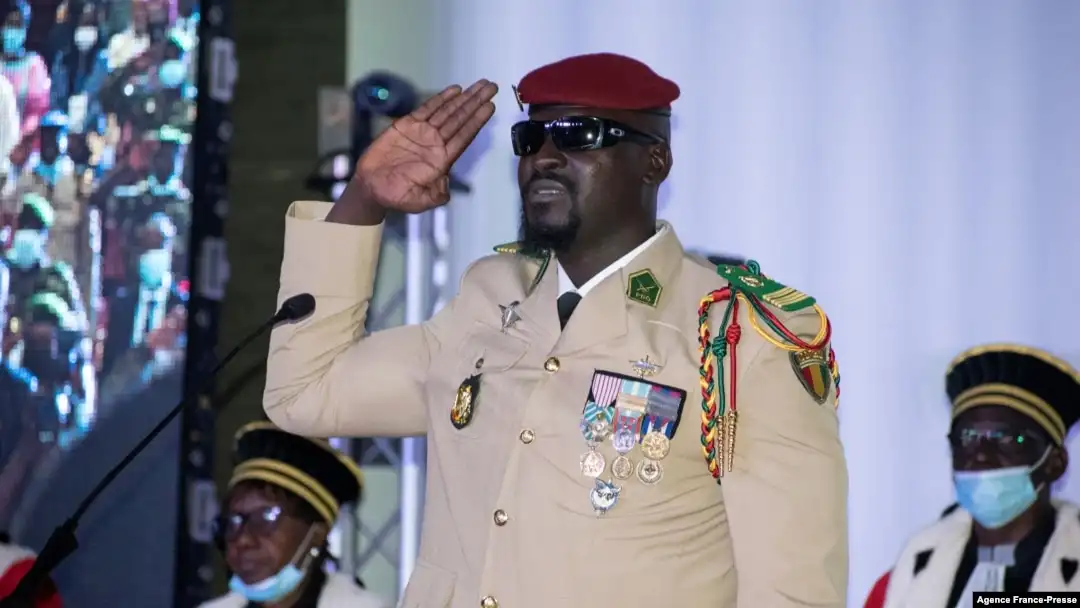
Gen. Mamadi Doumbouya, Guinea’s junta leader, is anticipated to win the nation’s first presidential election since the 2021 military coup that placed him in power. Scheduled for December 28, 2025, analysts predict an easy victory for Doumbouya due to a significantly weakened opposition.
Since ousting former President Alpha Condé, Doumbouya has initiated several infrastructure projects, including the Simandou mining venture and youth-focused technology initiatives. However, critics argue that the election is primarily a tactic to legitimize his authority, highlighting the exclusion, exile, or silencing of major opposition figures and the suppression of civil society.
Despite Guinea’s rich bauxite reserves, a significant portion of its population over half of the 15 million lives in severe poverty and food insecurity. The election operates under a new constitution that favors military leaders and extends presidential terms from five to seven years, raising skepticism among voters and critics. The Economic Community of West African States (ECOWAS) has sent observers, while around 6.7 million registered voters were expected to participate, with results anticipated within 48 hours.
In the capital, Conakry, voter turnout was reportedly low at several polling stations, partly due to opposition-led boycott calls. Authorities deployed nearly 12,000 police officers and elished checkpoints along major roads to maintain security during the election.
While some citizens praise Doumbouya’s progress on infrastructure and reforms, others perceive the election as invalid due to the lack of genuine opposition. Should no candidate receive a majority, a runoff election will follow. The results are expected promptly, possibly shaping Guinea’s political landscape for years to come.





Im not convinced Guineas military leader will bring positive ce. Lets hope for the best but stay cautious. What are your thoughts?
I cant believe theyre letting a military leader run for election after a coup. What message does that send to other countries?
I dont know, man. Can we really trust a military leader to transition smoothly to a democratic elected president? Seems fishy to me.
Is it ethical for a military leader to transition to a civilian role after a coup? Lets discuss!