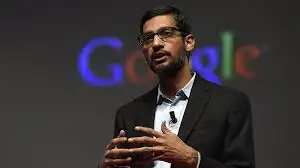
Google CEO Sundar Pichai has said the company is moving ahead with plans to build solar-powered data centers beyond Earth under a program called Project Suncatcher. The idea is to tap the vastly greater and continuous solar energy available in space as a way to power the energy-hungry infrastructure underpinning modern AI.
Pichai described the concept as a long‑term “moonshot” ultimately relocating parts of computing infrastructure into orbit to make better use of the sun’s enormous energy potential. As a first practical step, Google will partner with satellite imagery firm Planet to launch two test satellites in early 2027 to validate hardware and systems in low Earth orbit.
Pichai predicted that what sounds experimental today could become a standard approach within a decade. He argued that space-based facilities could offer a sustainable route for scaling AI compute as demand grows.
Other companies are already experimenting with off‑Earth computing. Starcloud, a startup backed by Y Combinator and Nvidia, recently lofted an AI-capable satellite and claims orbital centers can cut carbon emissions by an order of magnitude, even when factoring launch emissions. Falling launch and satellite costs have made such pilots more feasible, but the ultimate price tag for full-scale space data centers remains unclear. Estimates show conventional data center spending could top $5 trillion by 2030, according to a McKinsey analysis, underscoring the scale and uncertainty of the investment needed.
Google itself is aggressively expanding terrestrial capacity as well. The company announced a $40 billion data center investment in Texas this month and has ramped up overall computing infrastructure following the release of its Gemini 3 model. That rapid buildup has prompted warnings about potential overcapacity: McKinsey cautions that overinvesting risks stranded assets, while underinvesting risks falling behind competitors.
The sustainability debate is central to the push into space. A U.S. Department of Energy report noted that domestic data center load has tripled over the past decade and could double or triple again by 2028; data centers used more than 4% of U.S. electricity in 2023 and may account for as much as 12% by 2028. Google’s own figures show data center electricity use rising from 14.4 million MWh in 2020 to 30.8 million MWh most recently, though the company reports a 12% reduction in data center energy‑related emissions in 2024 despite growth.
Project Suncatcher joins a broader industry search for lower‑carbon compute models—whether through efficiency gains, more renewables on Earth, or relocating compute to space. While prototypes are already flying, major technical, financial, and regulatory hurdles remain before orbital data centers become common.













Wow, sending AI data centers into space? Whats next, robots on Mars? Exciting or risky move? Lets discuss!
Honestly, sending AI data centers into space sounds cool, but is it really necessary? Lets discuss the pros and cons.
This sounds like soing straight out of a sci-fi movie! Imagine AI data centers floating around in space… the future is here, folks!
This is a game-cer! Orbiting AI data centers? Whats next, space robots serving us coffee? Count me in! 🚀🤖☕