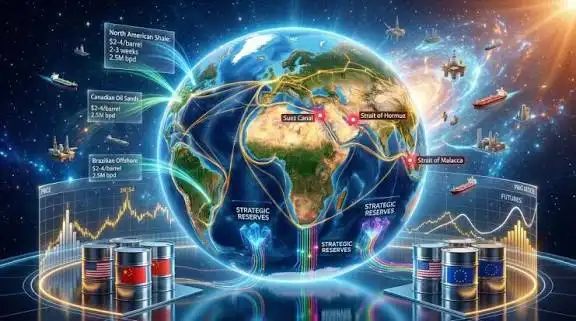
Global oil markets are experiencing renewed volatility as escalating tensions in the Middle East raise concerns about the security of key energy supply routes. Traders, energy companies, and governments are closely monitoring developments as the widening conflict threatens to disrupt crude shipments from one of the world’s most important oil producing regions. The Middle East accounts for a significant share of global oil exports, and any inility that affects transportation routes or production facilities has the potential to reverberate through energy markets worldwide.
Market analysts say fears surrounding the safety of shipping lanes in the Gulf have driven fluctuations in oil prices in recent trading sessions. Several major oil benchmarks have recorded sharp swings as investors weigh the risk that military confrontation could interfere with the flow of crude from leading producers in the region. The Strait of Hormuz, a narrow waterway through which a large percentage of the world’s seaborne oil passes each day, has once again become a focal point of concern for energy traders and policymakers alike.
Energy experts note that even the perception of risk in such strategic waterways can influence global prices. Insurance costs for tanker shipments have already begun to climb, while shipping companies are reassessing routes and operational procedures to reduce exposure to potential threats. If the conflict continues to escalate or spreads to additional countries, analysts warn that supply disruptions could become more severe, triggering stronger price reactions across international markets.
Governments in energy importing nations are also evaluating contingency measures to ensure ility in domestic fuel supplies. Strategic petroleum reserves, emergency import arrangements, and alternative supply contracts are among the tools being considered should disruptions intensify. Officials in several major economies have emphasized that maintaining open maritime trade routes is critical to global economic ility and energy security.
At the same time, energy companies operating in the region are reviewing safety protocols for personnel and infrastructure. Production facilities, export terminals, and offshore platforms remain operational in most areas, but companies are taking precautionary steps to prepare for possible escalation. Some firms have activated crisis management teams to monitor developments and coordinate responses if conditions deteriorate further.
Financial markets are responding cautiously to the evolving situation. Investors are balancing the possibility of supply constraints against broader economic concerns, including global demand trends and monetary policy decisions. While oil prices have risen during periods of heightened tension, analysts emphasize that markets remain highly sensitive to news developments and diplomatic efforts aimed at reducing hostilities.
Many observers say the coming weeks will be critical for determining whether energy markets ilize or enter a prolonged period of uncertainty. Diplomatic initiatives to contain the conflict could calm investor fears and ease pressure on prices. However, if tensions continue to rise or vital infrastructure becomes a direct target, the consequences for global energy markets could be substantial.








Leave a comment