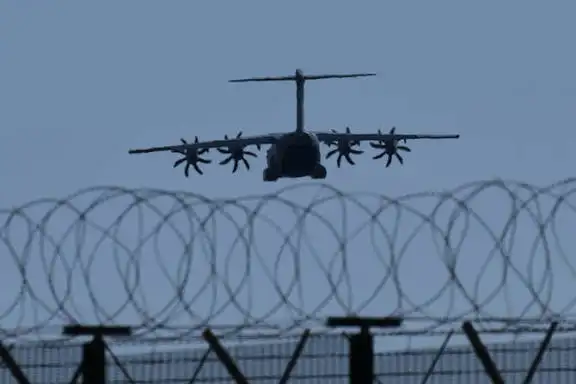
Global financial markets declined sharply as intensifying air operations in the Middle East unsettled investors and reignited concerns about inflationary pressure. Major stock indices in Europe, Asia and North America posted losses, while the United States dollar strengthened as traders moved toward perceived safe haven assets.
The sell off followed escalating military exchanges involving Iran, Israel and the United States, developments that have already driven volatility in energy markets. Oil prices surged amid fears of supply disruptions, raising the prospect of higher transportation and manufacturing costs worldwide. Economists warn that sustained increases in energy prices could complicate central bank efforts to stabilize inflation.
In New York, benchmark indices opened lower as energy and airline stocks came under pressure. European markets mirrored the trend, with broad based declines across industrial and consumer sectors. Asian markets had earlier closed weaker, reflecting investor unease over potential spillover effects on trade and supply chains.
Currency markets also reacted. The dollar gained against several major currencies as investors sought liquidity and stability. Analysts noted that a stronger dollar can amplify challenges for emerging economies by increasing the cost of servicing foreign denominated debt and raising import bills, particularly for fuel dependent nations.
Bond markets experienced renewed demand, pushing yields lower in some advanced economies. Investors appear to be hedging against the possibility of slower global growth if geopolitical tensions persist. Financial strategists caution that markets remain highly sensitive to political signals and could rebound quickly if credible diplomatic progress emerges.
Central bank officials are closely monitoring developments. Many economies have only recently begun to ease monetary tightening implemented during previous inflationary spikes. A renewed surge in commodity prices may limit policy flexibility and delay anticipated interest rate adjustments.
Corporate leaders are also assessing the impact of the crisis on supply chains. Shipping disruptions and higher insurance costs in the Gulf region could ripple through global logistics networks, affecting industries ranging from automotive manufacturing to food production.
Despite the immediate downturn, some analysts argue that markets are reacting primarily to uncertainty rather than confirmed structural damage to global supply. However, they warn that prolonged instability would likely deepen economic strain.
As diplomatic efforts continue alongside military operations, investors remain focused on developments in the region. The trajectory of energy prices and the scope of the conflict will be critical factors shaping market performance in the weeks ahead.











Leave a comment