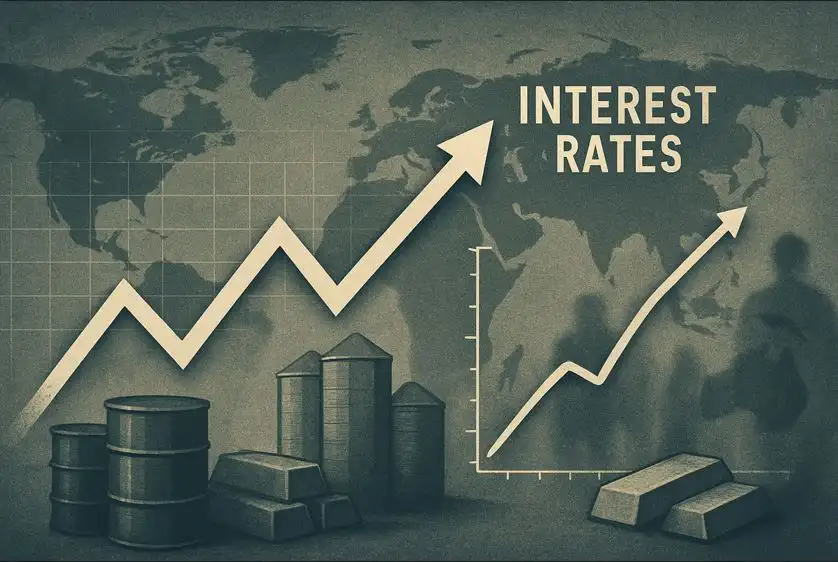
Global financial markets faced increased volatility following the Reserve Bank of Australia’s (RBA) unexpected decision on December 9, 2025, to maintain its benchmark interest rate at 3.6%, while hinting at potential future hikes if inflation persists. RBA Governor Michele Bullock indicated that rate cuts are unlikely in the near term, resulting in a 0.2% appreciation of the Australian dollar to $0.6639 and rising bond yields, with markets now anticipating a possible rate increase as early as February 2026.
This decision was influenced by rising inflation, which has escalated for four consecutive months, reaching 3.8% in October, with core inflation above the target at 3.3%. Strong economic indicators, including robust growth, a resilient labor market, increasing home prices, and consumer optimism, suggest less restrictive financial conditions.
In Asia, following a 7.5-magnitude earthquake in northeast Japan, the yen strengthened. Market caution prevailed ahead of significant global central bank meetings, including an expected rate cut from the U.S. Federal Reserve (Fed). The U.S. dollar index remained steady, with futures indicating an 89.4% probability of a 25-basis-point Fed rate cut.
European markets displayed mixed reactions, with the euro appreciating nearly 13% in 2025 against the backdrop of a weakening Chinese yuan. Such strength poses challenges for the European Central Bank’s neutral monetary policy, particularly if the euro rises beyond $1.20, complicating the export competitiveness of the Eurozone.
In the U.S., investors are watching the upcoming Fed meeting with expectations for a rate cut amidst a cooling labor market, despite persistent inflation. Overall, global markets are navigating a complex interplay of economic indicators and central bank policies, leading to cautious investor sentiment and fluctuations.











Wow, can you believe the impact of interest rate hikes on global markets? Crazy how quickly things can ce in the economy.
I cant believe how the global markets are reacting to the interest rate increase! Do you think this will have a long-term impact?
Wow, can you believe the impact of that interest rate increase on global markets? Wild times ahead, lets see how this unfolds! 🤯📈🌎
Cant believe the markets are reacting like this! Who saw that interest rate increase coming? Crazy times were living in.