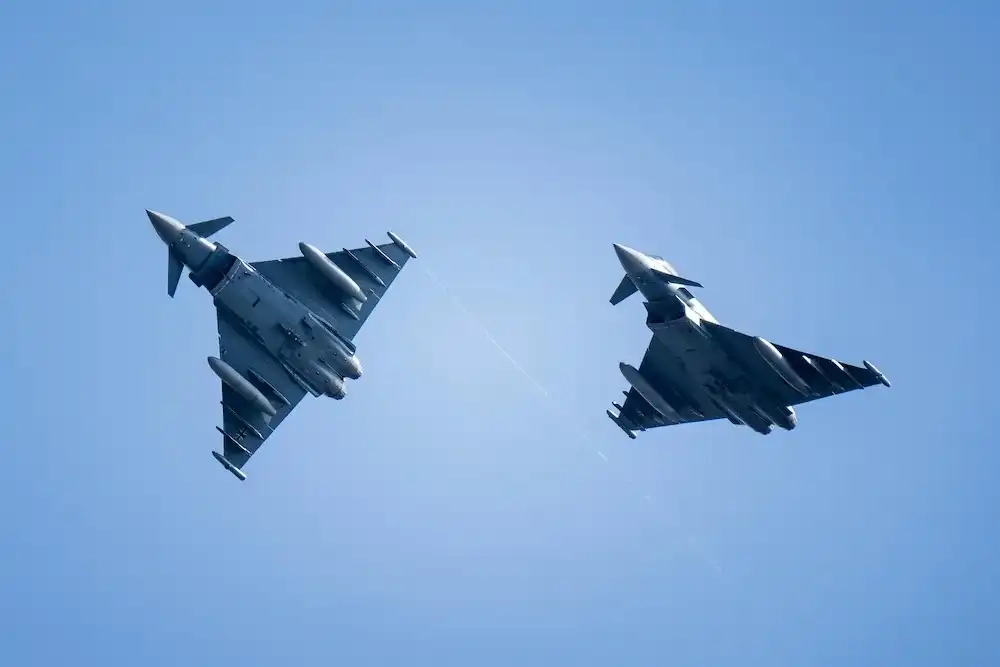
Germany, France, and Spain are ramping up efforts to resolve a long-standing stalemate in the Future Combat Air System (FCAS) project, a €100 billion initiative to develop a next-generation European fighter jet. Initiated over eight years ago, the FCAS is vital for Europe’s defense, especially given current geopolitical tensions.
The program has encountered significant delays, largely due to industrial disputes, primarily between France’s Dassault Aviation and Germany’s Airbus. Central issues include the distribution of workshare and technology rights, with France seeking a dominant position. In response, Germany’s IG Metall union has threatened to withdraw support for the FCAS if Dassault continues to be involved, citing trust and leadership concerns, further complicating progress.
To address these challenges, defense ministers from the three nations Germany’s Boris Pistorius, France’s Catherine Vautrin, and Spain’s Margarita Robles are scheduled to meet in Berlin. Additionally, a meeting between German Chancellor Friedrich Merz and French President Emmanuel Macron is planned. A crucial focus for these discussions will be the development of data network capabilities, known as the “Combat Cloud,” and unmanned systems.
The urgency of these negotiations is highlighted by potential ramifications for Europe’s defense capabilities. The FCAS aims to replace current fighter jets, like France’s Rafale and Germany and Spain’s Eurofighters, by 2040. Program delays could undermine Europe’s strategic autonomy and hinder its ability to respond to emerging security threats.
As the meetings approach, all parties face pressure to reach an agreement that reconciles national priorities with the shared objective of bolstering Europe’s defense infrastructure. The results of these discussions will be pivotal in shaping the future of the FCAS and its significance in Europe’s defense strategy.







Do you think theyll actually resolve this fighter jet drama or just keep circling around it? 🤔 #FighterJetConflict #GermanyFranceSpain
I think its ridiculous how these countries are bickering over fighter jets. Cant they just share like normal adults?
I think its ridiculous how these countries cant figure out a solution. Just pick a jet and move on already!
Do you think these countries can really resolve this conflict peacefully or is it just wishful thinking? Lets discuss!