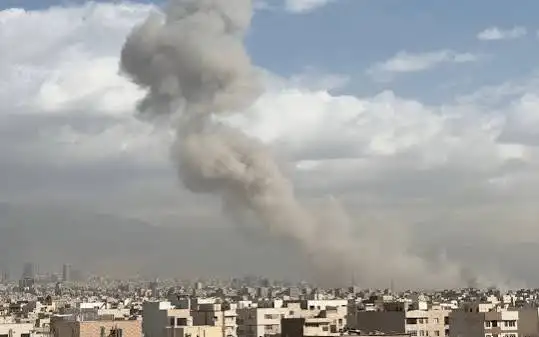
Explosions were reported across parts of Tehran as coordinated military strikes unfolded, marking one of the most dramatic escalations in tensions between Israel and Iran in recent years. Thick plumes of smoke were seen rising over sections of the Iranian capital, prompting widespread concern among residents and triggering emergency response protocols.
Iranian state media acknowledged that multiple sites had been struck but did not immediately provide detailed information regarding casualties or the full extent of the damage. Witness accounts described loud detonations during the early hours, followed by the activation of air defense systems. Authorities urged citizens to remain indoors and avoid travel near strategic facilities.
In Israel, officials declared a nationwide state of emergency shortly after confirming the strikes. Sirens were activated in several cities amid concerns of possible retaliation. Civil defense authorities instructed residents to prepare for potential missile or drone attacks, advising people to remain near designated shelters.
Israeli military officials stated that the operation targeted infrastructure assessed to pose immediate security threats. They described the action as necessary to pre empt further hostile capabilities. Security forces across Israel were placed on heightened alert, with additional troop deployments near sensitive installations and urban centers.
The escalation represents a rare moment of open confrontation between the two long standing adversaries. For years, tensions have simmered through indirect engagements in neighboring territories. Direct strikes on Iranian soil and the resulting explosions in Tehran signal a shift toward overt military engagement.
Air traffic in the region faced significant disruption. Iranian authorities temporarily restricted portions of national airspace, while neighboring countries reviewed aviation routes as a precautionary measure. Airlines rerouted flights to avoid potential conflict zones.
International reaction was swift. The United Nations called for immediate restraint and emphasized the importance of protecting civilians. European leaders expressed deep concern over the developments, warning that further escalation could destabilize the broader Middle East.
Financial markets reacted with volatility, reflecting investor unease. Oil prices rose amid fears of supply disruptions, while global equities showed signs of risk aversion.
Security analysts caution that the declaration of a state of emergency in Israel underscores the seriousness of anticipated retaliation. With both sides signaling readiness, the potential for rapid escalation remains high.









Leave a comment