
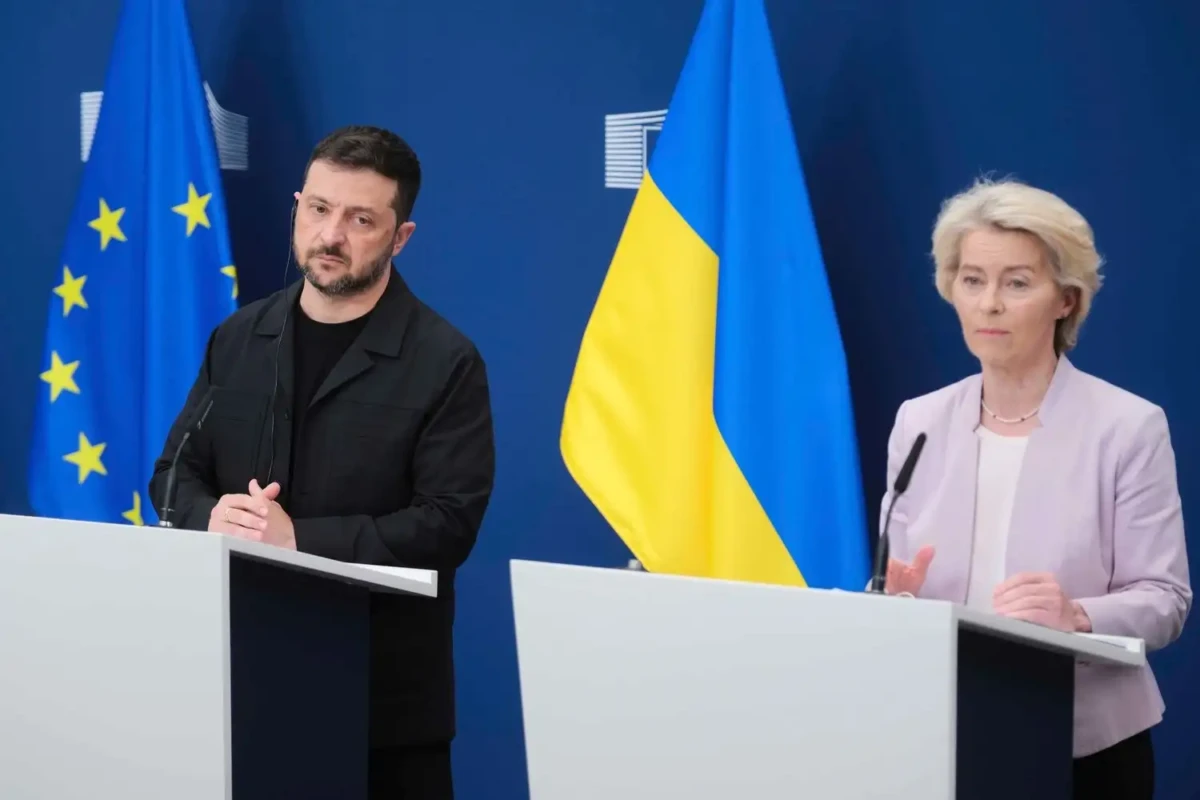
European Union leaders have pledged to support Ukraine’s economic and military needs by providing €135 billion ($157 billion) over the next two years, as estimated by the International Monetary Fund. A critical summit is set for December 18 to finalize funding strategies, focusing on two main options: utilizing the interest from €210 billion ($244 billion) in frozen Russian assets, mainly held in Belgium, and issuing EU bonds.
The “reparations loan” concept would involve using asset-generated interest to back a loan that Ukraine would only repay if Russia consents to reparations and lifts sanctions. However, Belgium has expressed concerns about retaliation and legal complications, opposing this asset-based plan despite support from Germany. Securing the use of Russian assets requires a qualified majority of EU members, while bond issuance necessitates unanimous consent, complicating matters further due to Hungary’s consistent vetoes and growing skepticism in Slovakia and the Czech Republic.
European Council President Antonio Costa noted that the European Commission is nearing completion of a legal framework aimed at garnering support for the funding plan. The Commission recently suggested raising €90 billion (around $104.7 billion) through frozen Russian assets or international borrowing to aid Ukraine’s military and essential services. België’s resistance poses significant challenges since it holds a substantial amount of the contested assets.
The European Central Bank warned against the potential erosion of confidence in the euro if frozen assets are utilized. While EU officials stress urgent action and solidarity, complexities surrounding legal and financial issues, particularly Belgium’s objections, could hinder consensus. As the December 18 summit approaches, there is immense pressure on EU leaders to elish a viable funding mechanism that meets Ukraine’s needs while addressing member states’ concerns.










I dont get why they cant just freeze Russian assets to help Ukraine. Politics is so complicated. Are they really trying their best though?
Should Ukraine get more financial support from European leaders? Its a tough call, but access to Russian assets could be a game-cer.
I cant believe the EU approved funding for Ukraine, but accessing Russian assets will be a headache. Politics, am I right?
Do you think European leaders should prioritize accessing Russian assets to fund Ukraine, or are there better ways to support the country? Lets discuss!