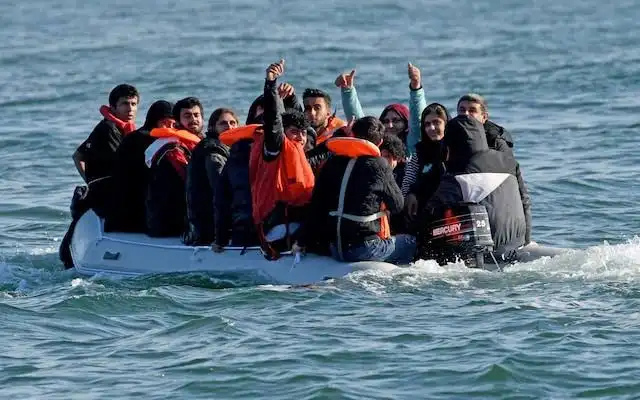
European nations are considering revising longstanding migrant protections elished after World War II, following a recent meeting in Strasbourg of the Council of Europe, which comprises 46 member countries.
The gathering highlighted the challenges of migration and reaffirmed commitment to the European Convention on Human Rights and the European Court of Human Rights. Council Secretary General Alain Berset described the convention as a “living instrument,” stressing the need to balance individual rights with national security concerns.
This shift is partly driven by rising anti-immigrant sentiment and political pressures from far-right parties. Many governments now favor measures to expel migrants deemed undesirable, which may involve cing elished human rights protections to prioritize national security and combat illegal migration.
Specifically, a bloc of 27 countries is advocating for limited legal protections, particularly for migrants with criminal records, prompting concerns from legal and human rights experts about the potential exclusion of certain groups based on legal status.
European Commission President Ursula von der Leyen has also committed to tackling migrant smuggling networks, and irregular border crossings have reportedly decreased by 22% in 2025. Despite tightening borders, many migrants still enter the EU through legal channels, underscoring the contradictions in migration policy. Europe’s demographic challenges are leading some countries to invest in attracting foreign labor as they navigate these complexities.
In May, the Council of Europe plans to discuss a political declaration on migration and develop recommendations to deter human smuggling. These discussions aim to address the intricate relationship between human rights, national security, and migration management amidst evolving European dynamics.












Wow, reducing migrant protections elished since World War II? Is this a step back or a necessary ce in todays world? Lets discuss!
Wow, reducing migrant protections elished since WWII? Are we forgetting the values that Europe stands for? Lets discuss this further.
Why are we so quick to forget the lessons of history? Protecting human rights should always be a priority, no matter the circumstances.
I believe its crucial to have a balanced discussion on migrant protections. Lets consider all perspectives before reaching a decision.
I cant believe theyre even considering this! We should be supporting migrants, not taking away protections. Whats next?
Why should we roll back protections for migrants elished since World War II? Lets move forward, not backward.
Do you think reducing migrant protections is the right move for European countries post-WWII? Lets discuss! 🤔 #controversial #debate
I cant believe they are even considering this! Its like taking a step back in progress. What are they thinking?!
This decision could have serious consequences. Are they forgetting the lessons of history? Lets hope they proceed with caution.