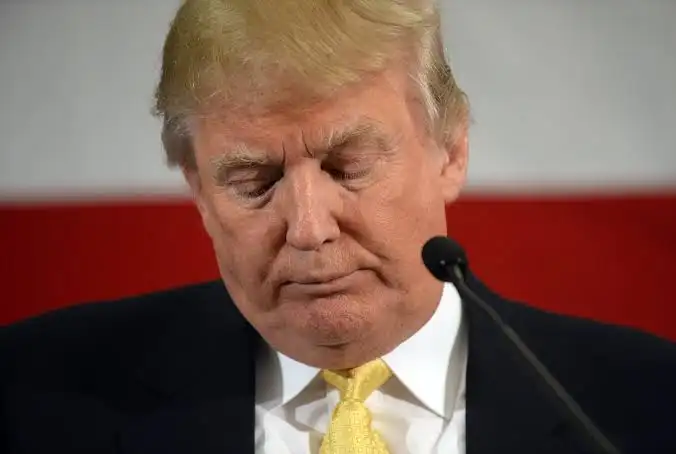
Across Europe, a dramatic shift in public opinion is unfolding. A new poll reveals that half of Europeans in several major countries now view the President of the United States as an enemy of Europe, a sentiment that signals a deep rupture in a relationship that once defined global politics. The survey, conducted across seven European Union countries including France, Belgium, Germany, Italy, Spain, Denmark and Poland, paints a stark picture of mistrust.
More than half of respondents described the American leader as an enemy, while only a small fraction saw him as a friend of Europe. A significant number of participants remained undecided, reflecting confusion and uncertainty about the future of transatlantic relations. The timing of the poll is crucial. It was carried out shortly after controversial statements and actions that alarmed European governments and citizens alike. Among the most striking was a threat involving Greenland, a Danish autonomous territory.
Although the plan was later abandoned, the incident left lasting anxiety across Europe, particularly in Denmark, where a majority of respondents expressed hostile views toward the American president. Beyond individual incidents, the broader concern lies in the perception that the United States is no longer a reliable partner. Many Europeans believe that democratic values, once seen as the foundation of the transatlantic alliance, are being undermined. Only a small percentage of those surveyed felt that the American leader respects democratic principles, a statistic that reflects growing skepticism about Washington’s political direction. European leaders now find themselves in a difficult position.
For decades, Europe and the United States stood side by side as allies in global affairs. Today, that partnership appears strained as rhetoric and policy from Washington increasingly challenge European sovereignty and unity. Governments across the continent are struggling to define clear boundaries while preparing for unpredictable shifts in American policy. The tension has also been fueled by ideological narratives emerging from Washington. Recent strategic documents have portrayed migration as a threat to Europe’s identity and encouraged political movements that align with right wing ideologies.
Such positions have intensified fears that the United States is not only distancing itself from Europe but actively reshaping its political landscape. Despite recent signs of restraint, European nations remain cautious. Even when aggressive proposals are withdrawn, the underlying uncertainty persists. Many believe that the current moment represents more than a temporary disagreement. It may mark the beginning of a new era in which Europe must rethink its dependence on American leadership and redefine its place in the world. As criticism grows and trust erodes, one reality is becoming impossible to ignore. The bond between Europe and the United States, once considered unbreakable, is now being tested in ways never seen before. The question facing Europe is no longer whether the relationship will ce, but how far that ce will go and what it will mean for the future of global power.










Is this backlash against America really unprecedented, or have we just forgotten history? Lets dive deeper!
Is this really a turning point or just a temporary rift? Europe and America have weathered storms before.
What do you think: Is Europe really turning against America or is it just a temporary backlash? Curious to hear opinions!
Honestly, I think Trumps behavior is embarrassing us on the global stage. Can we just fast forward to a more competent leader already?
Is it just me or does it feel like a game of political ping pong between Europe and America? 🏓 #BacklashGalore
Interesting read, but is Europe really turning against America or just against Trump? Lets discuss!
I dont get why some people are surprised by Europe turning against America. Diplomatic relationships are always shifting. Its not a new phenomenon.
Does Europe really have the right to turn against America? Lets discuss this over some virtual coffee!
This article is biased! Europes feelings towards America go beyond Trump. Lets not oversimplify complex international relations.