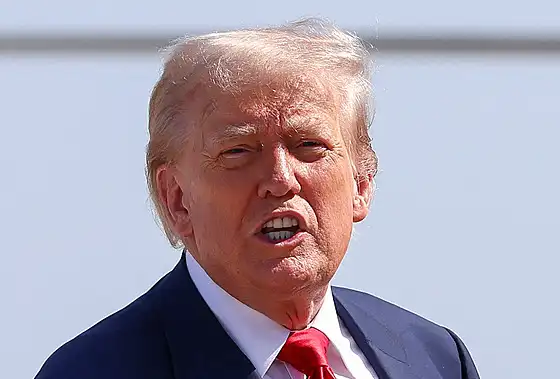
Just days after President Donald Trump called wind power “s” and criticized nations investing in it, nine European countries signed a landmark agreement to build the world’s largest offshore wind energy hub in the North Sea. The deal, signed by Belgium, Denmark, France, Germany, Ireland, Luxembourg, the Netherlands, Norway, and the UK, aims to generate 100 gigawatts of offshore wind energy — enough to power roughly 50 million homes.
The project is designed to enhance energy security, reduce dependence on imported fossil fuels, and provide affordable electricity. Europe’s reliance on external energy sources has grown in recent years, with nearly 60% of its energy imported and Russian gas previously used as a geopolitical lever. The shift to US liquefied natural gas helped fill the gap but exposed Europe to volatile prices under a Trump administration that has openly pursued aggressive energy and trade policies.
Experts say Europe’s move toward renewable energy is both strategic and economic. Wind and solar now provide 30% of the European Union’s electricity, with wind alone generating 19% in 2025, surpassing fossil fuels for the first time. The North Sea, with its shallow waters and high winds, is considered the most promising area for offshore wind, offering interconnection across countries and reduced costs through large-scale investment.
Globally, the US remains committed to fossil fuels, attempting to limit wind and solar projects, while other nations like China and India rapidly expand renewables. European analysts argue that Trump’s anti-renewable rhetoric and policies have unintentionally accelerated Europe’s clean energy ambitions, turning wind and solar from alternatives into the backbone of the continent’s energy supply.
The North Sea project reflects Europe’s broader strategy to achieve energy independence, strengthen political resilience, and reduce exposure to external pressure from foreign energy exporters. Experts say clean energy is no longer just about climate policy but also about economic ility, energy security, and political leverage in a cing global landscape.





Leave a comment