
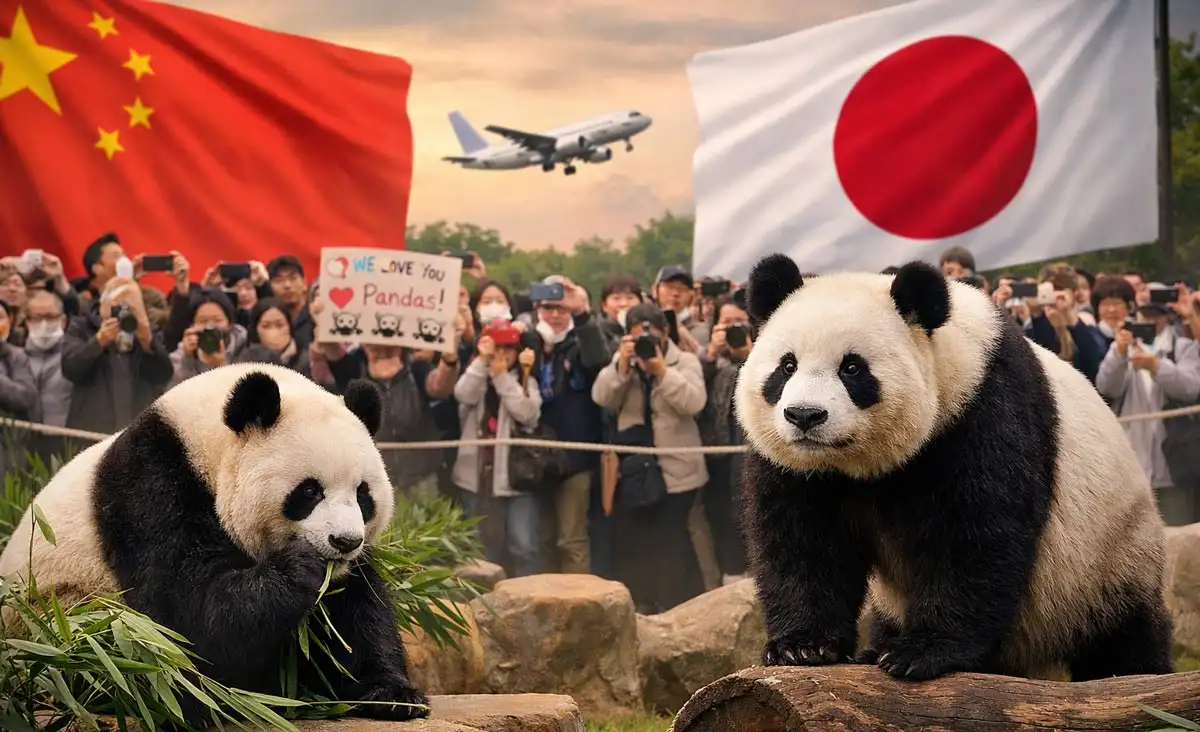
The departure of giant pandas Xiao Xiao and Lei Lei from Ueno Zoo marked more than the end of a popular attraction. It symbolised a sharp downturn in relations between China and Japan after months of escalating tensions.
Beijing ordered the return of the pandas, leaving Japan without Chinese pandas for the first time in decades. The move followed controversial remarks by Japanese Prime Minister Sanae Takaichi suggesting Japan could activate its self defence forces in the event of an on Taiwan.
Taiwan remains a red line issue for Beijing, which claims the self governed island as its territory and has not ruled out the use of force. Any conflict could draw in the United States and regional allies, including Japan.
China reacted swiftly to Takaichi’s comments, condemning them as interference in its sovereignty. While her remarks aligned with previous Japanese government positions, analysts note it was the first time a sitting prime minister had spoken so directly on the issue.
Since then, Beijing has applied what experts describe as greyzone pressure. Military activity has increased around disputed areas such as the Senkaku Islands, known in China as the Diaoyu islands. Economically, China has restricted exports of rare earth elements and dual use technologies to Japan, while reducing tourism and cancelling cultural events.
Diplomatic tensions have also risen, with China postponing regional summits and raising historical grievances linked to the Yasukuni Shrine. Meanwhile, nationalist sentiment has surged online in China.
Despite the mounting strain, analysts say Beijing’s actions remain measured compared to past disputes, leaving room for further escalation. With Takaichi strengthened by a decisive electoral mandate and pledging increased defence spending, neither side appears eager to back down.
Observers warn that even if tensions ease, relations are unlikely to return to previous levels, setting the stage for a prolonged and uneasy rivalry in East Asia.











Leave a comment