
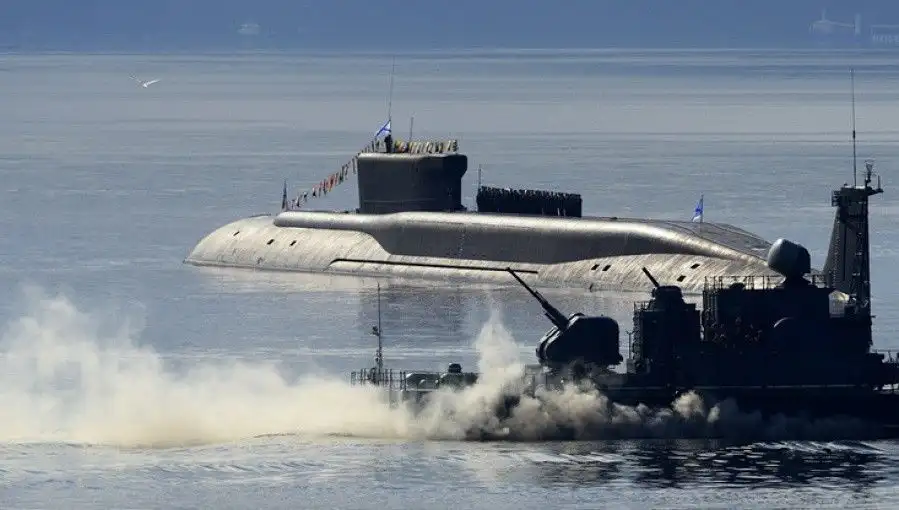
China has significantly increased its nuclear-powered submarine production over the past five years, launching more vessels than the United States and challenging Washington’s long-held advantage in sea power.
The buildup within the People’s Liberation Army Navy includes both ballistic-missile (SSBN) and (SSN) submarines. Between 2021 and 2025, China launched 10 nuclear-powered subs compared with seven by the US, totaling 79,000 tons versus 55,500 tons. In contrast, during 2016–2020, China added only three nuclear subs while the US launched seven.
China’s active nuclear-powered sub fleet currently includes 12 boats: six SSBNs and six guided-missile or subs. The US maintains a much larger fleet of 65 nuclear-powered submarines, including 14 SSBNs. Additionally, China operates 46 conventionally powered submarines, whereas the US has none.
To accommodate the expanded production, China has significantly upgraded the Huludao shipyard of Bohai Shipbuilding Heavy Industry Co. in northern China. Newer classes, including the Type-094 SSBNs, enhance Beijing’s nuclear triad, and the Type-096 SSBNs are expected to enter production later this decade.
The PLA Navy has also launched at least six guided-missile nuclear subs (SSGNs), equipped with vertical launch systems capable of firing advanced anti-ship missiles.
While China’s numbers are increasing, analysts note that US and European submarines still hold advantages in stealth and technology. Experts warn, however, that in naval combat, larger forces often prevail, and China already possesses the world’s largest fleet of destroyers, frigates, and surface combatants.
Meanwhile, the US faces challenges in maintaining its submarine fleet. Congressional reports indicate the US Navy has struggled to meet construction goals for Virginia-class submarines and is behind schedule on Columbia-class ballistic-missile subs. sub numbers are expected to drop to 47 by 2030, potentially weakening conventional deterrence against China.










Leave a comment