
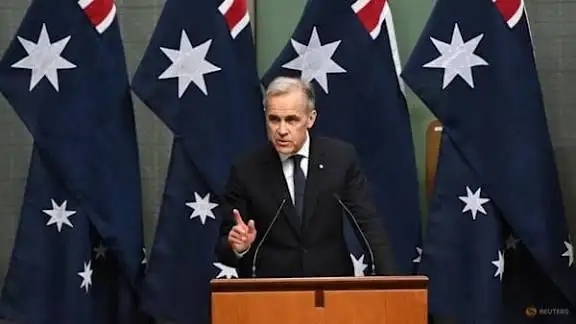
Canada’s prime minister has stated that military involvement in the expanding conflict involving Iran, Israel, and the United States cannot be ruled out, a remark that reflects growing concern among Western governments as tensions across the Middle East continue to intensify. The statement marks one of the clearest indications that Canada may consider a more active role if the regional crisis worsens.
Speaking to reporters during a press briefing, the prime minister emphasized that Canada is closely monitoring the situation alongside its international partners. While no decision has been made regarding direct military participation, the government acknowledged that the rapidly evolving security environment requires careful assessment of all possible responses.
Officials in Ottawa said Canada remains committed to working with allies to support ility and security in the region. The government has maintained regular communication with partners including the United States and several European nations as the conflict continues to develop. According to diplomatic sources, discussions have focused on humanitarian preparations, protection of civilians, and potential coordination of international responses should the crisis escalate further.
The prime minister stressed that Canada’s immediate priorities include protecting Canadian citizens living or traveling in the Middle East and supporting diplomatic efforts aimed at reducing tensions. Government agencies have begun reviewing evacuation plans and advising Canadians in affected areas to remain alert to official travel guidance.
Despite the emphasis on diplomacy, the comments acknowledged the possibility that international partners could request additional support if the conflict expands significantly. Canada has historically participated in multinational operations and peacekeeping missions, often contributing logistics, intelligence support, and specialized military units.
Defense analysts say Canada’s statement reflects a broader pattern among Western allies as they evaluate the potential implications of the conflict. If hostilities continue to intensify or spread beyond the current theater of operations, international coalitions could begin forming to support defensive operations, maritime security, or humanitarian assistance.
Public reaction within Canada has been mixed. Some political leaders and analysts argue that Canada should focus primarily on diplomatic engagement and humanitarian aid rather than military action. Others contend that maintaining strong alliances may require Canada to consider a more direct role if regional ility deteriorates further.
Security experts note that the current conflict presents complex strategic challenges for many governments. Military involvement carries significant risks, particularly in a region where multiple armed actors operate and where escalation could draw in additional countries.
Canada has previously contributed to coalition operations in the Middle East, including missions related to counterterrorism and regional ilization. However, officials say any decision regarding involvement in the present conflict would require extensive consultation with parliament and allied governments.
For now, Canadian authorities continue to emphasize diplomatic engagement while keeping military options under review. As the conflict evolves and international pressure for coordinated responses grows, Canada’s role may become clearer in the weeks ahead.



Leave a comment