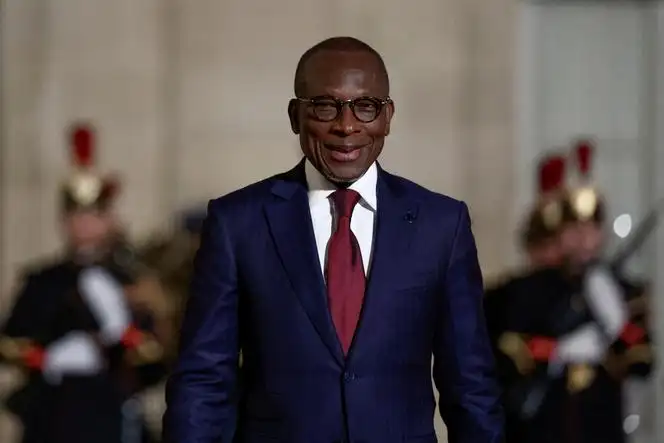
Benin’s international bond prices fell on Monday after a failed coup attempt the previous day. Euro-denominated bonds maturing in 2052 dropped up to 1.8 cents to 88.04 cents, while dollar-denominated bonds also decreased by around 1.5 cents. The most significant declines occurred in longer-dated maturities, although these partially recovered, with bonds maturing in 2038 and beyond down just over one cent each.
The coup attempt took place on December 7, 2025, when Lieutenant Colonel Pascal Tigri and a group of solrs seized the national television station and claimed to have dismissed President Patrice Talon’s government. They identified themselves as the Military Committee for Refoundation and announced the dissolution of state institutions and the suspension of the constitution.
The Beninese government, backed by loyal military forces and Nigerian assistance, quickly regained control. President Talon labeled the coup attempt a “senseless adventure,” vowing to hold the mutineers accountable. The Interior Minister confirmed that the situation was “totally under control,” with at least 14 arrests related to the attempt.
The Economic Community of West African States (ECOWAS) condemned the coup and deployed a standby force, including troops from Nigeria, Sierra Leone, Ivory Coast, and Ghana, to support the government and restore constitutional order.
While the coup was swiftly suppressed and elections are expected to proceed as scheduled in January and April 2026, analysts warn that the incident could tarnish Benin’s reputation as a le nation. Notably, the country has maintained a 53-year record without a successful coup, a rarity in West Africa, which was reinforced by strong international support during this crisis.












I dont think the coup attempt should impact Benins foreign bonds. Political inility doesnt always reflect economic ility.
Should Benin prioritize ility over economic growth post-coup attempt? Tough call. Whats your take?
I dont get why the foreign bonds are declining just because of a coup attempt. Seems like an overreaction to me.
I wonder if the coup attempt will have long-term effects on Benins economy. Its a shaky situation! 🤔🇧🇯 #economics #foreignbonds
Do you think Benins foreign bonds will recover after the coup attempt? Or is this a sign of inility? Curious to hear your thoughts!
I dont get why Benins foreign bonds are declining after a coup attempt. Does political inility always affect financial markets negatively?
Do you think Benins economic ility will recover after this coup attempt? Or is this just the beginning of more challenges ahead? 🤔
I cant help but wonder if this coup attempt will have long-term effects on Benins economy. Scary times ahead.