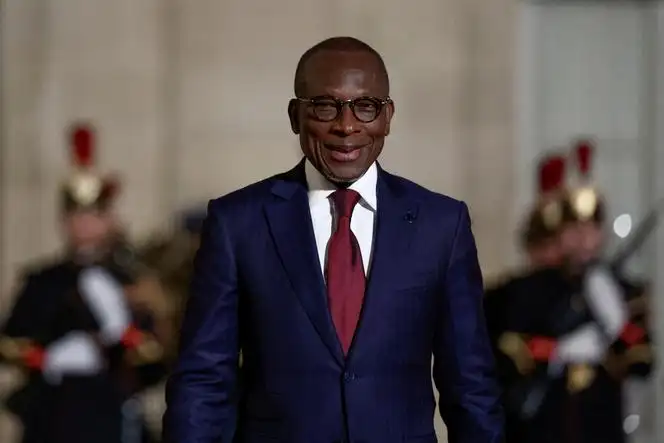
Benin’s government recently reported that a coup attempt was successfully thwarted, resulting in casualties on both sides. The insurrection occurred early Sunday, when solrs identifying as the Military Committee for Refoundation seized the national television station in Cotonou. They announced the dissolution of the government and the removal of President Patrice Talon. The mutiny leader, Lt. Col. Pascal Tigri, who previously served in Talon’s protection detail, led the effort.
Loyalist forces quickly resisted the mutineers, gaining support from Nigerian and Ivorian military forces, including air support. The rebellion was quelled by the afternoon, with several arrests made, although Tigri remains at large. Authorities successfully released two senior military officers held hostage during the confrontation.
The government pledged to identify and prosecute everyone involved in the coup attempt, emphasizing an ongoing investigation to find the perpetrators and their sponsors. However, they have not disclosed the specific number of casualties from the incident.
This coup underscores a troubling trend of military interventions in West Africa, often linked to political inility and public dissatisfaction. In response, the Economic Community of West African States (ECOWAS) has deployed a standby force, including troops from Nigeria, Ghana, Ivory Coast, and Sierra Leone, for restoration of order and democratic governance in Benin. This marks ECOWAS’s first military intervention since The Gambia in 2017.
While Benin has faced multiple coups since gaining independence from France in 1960, it has enjoyed relative political ility in recent decades. As the country approaches presidential elections in April 2026, these recent events reveal significant challenges in maintaining democratic institutions and the rule of law in the region.










I wonder if this coup will lead to more inility in Benin or if it will actually bring about positive ce.
Do you think the Benin coup will escalate or fizzle out? Its hard to predict the outcome in such a volatile situation!
I find it hard to believe both factions got injured in the coup. Soing doesnt add up here… 🤔
Do you think the coup in Benin will lead to long-term inility or will the authorities manage to restore peace quickly?
Wow, seems like a chaotic situation in Benin. Do you think this coup will have long-lasting effects on the countrys ility?
Is this a sign of inility in Benin or just a minor hiccup? Lets discuss the implications together.
Do you think this coup could lead to more inility in Benin? Or will it bring about positive ce? Lets discuss!
Do you think coups are ever justified, or is there always a better way to address political issues? Lets discuss!