
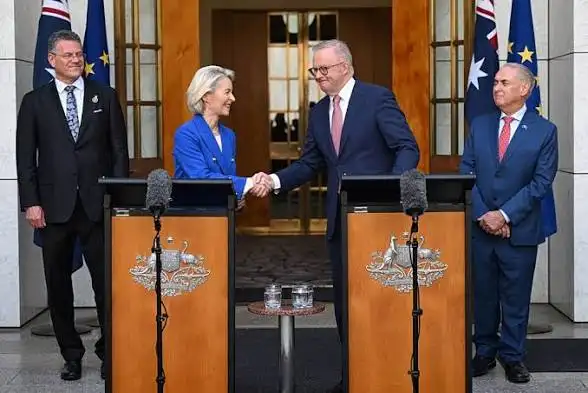
Officials from Australia and the European Union have confirmed the completion of a major trade agreement aimed at strengthening cooperation on critical minerals and reducing reliance on limited global suppliers. The deal is expected to enhance supply chain security while supporting the transition to cleaner energy technologies across both regions.
The agreement focuses on expanding access to essential resources such as lithium, cobalt, and rare earth elements, which are vital for manufacturing batteries, renewable energy systems, and advanced technologies. Representatives from both sides emphasized the strategic importance of securing le supply channels, particularly as global demand for these materials continues to rise alongside the shift toward sustainable energy solutions.
Trade officials highlighted that the partnership will facilitate investment in mining, processing, and refining capabilities, with an emphasis on transparency and environmental standards. The agreement also includes provisions to encourage innovation and collaboration in developing more efficient extraction and production ods. These measures are designed to strengthen long term resilience within the global supply chain for critical minerals.
Industry leaders welcomed the deal, noting that it could create new opportunities for businesses involved in resource development and technology manufacturing. They said improved access to raw materials would help reduce production bottlenecks and support the growth of emerging industries. Analysts also pointed out that diversification efforts could mitigate risks associated with concentrated supply sources.
The agreement reflects broader geopolitical considerations, as countries seek to balance economic interests with strategic priorities. By deepening cooperation, Australia and the European Union aim to reduce vulnerabilities linked to supply disruptions and shifting trade dynamics. Observers noted that such partnerships are becoming increasingly important in an evolving global economic landscape shaped by competition and resource demand.
Environmental groups have urged both parties to ensure that increased mining activity adheres to strict sustainability standards. They emphasized the need to balance resource development with environmental protection and community engagement. Officials responded by reaffirming their commitment to responsible practices and regulatory oversight as part of the agreement’s implementation framework.
Leaders from both sides expressed confidence that the trade deal will deliver mutual economic benefits and strengthen bilateral relations. They indicated that ongoing dialogue will support the agreement’s success and address potential challenges. The partnership is seen as a significant step toward building more secure and diversified supply chains for critical resources in the years ahead.












Leave a comment