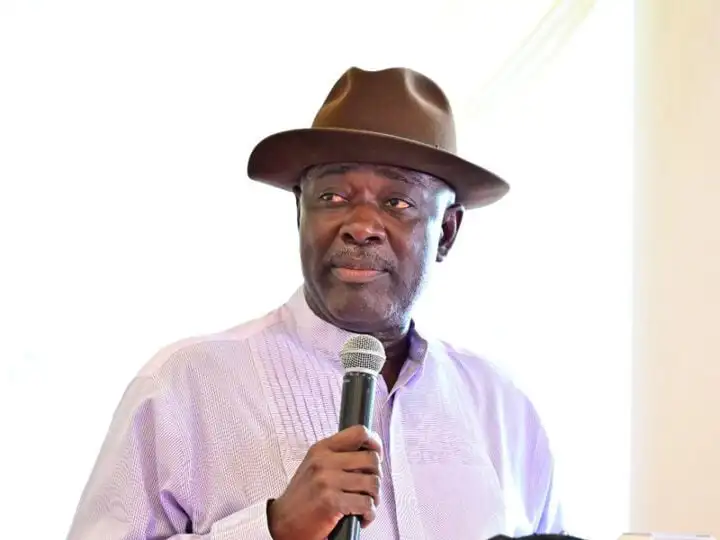
Minister of State for Petroleum Resources, Heineken Lokpobiri, has called on African countries to advocate for a global energy conversation that prioritises a realistic and inclusive energy mix rather than focusing solely on energy transition.
Speaking on Tuesday at the 10th Sub-Saharan Africa International Petroleum Exhibition and Conference (SAIPEC) in Lagos, Lokpobiri stressed that Africa should be allowed to responsibly exploit its oil and gas resources to tackle energy poverty and accelerate development. He argued that fossil fuels will remain vital for the continent’s growth for decades.
“The global discussion has clearly shifted from energy transition to energy mix. Africa must explore and utilise its resources in a responsible and environmentally sustainable manner for the benefit of its people,” Lokpobiri said, highlighting recent policy shifts by the International Energy Agency (IEA) as validation of Africa’s position.
Citing projections from OPEC and other institutions, he noted that fossil fuels will account for over 50% of global energy consumption in the foreseeable future. He also highlighted Africa’s minimal contribution to global emissions, questioning why countries responsible for the bulk of pollution continue to dictate energy policy.
Lokpobiri urged African service companies to move beyond intermediary roles, strengthen local value creation, and leverage the continent’s capacity to reduce dependence on imports. Africa, he noted, spends over $120 billion annually on imported oil and gas goods and services, and retaining even 20% of this value locally could be transformative.
On financing, Lokpobiri expressed optimism about the African Energy Bank, with Nigeria covering 70% of its capital subscription, and urged stakeholders to unlock Africa’s domestic capital—over $4 trillion in pension funds, insurance assets, and sovereign wealth funds—to fund energy projects.
He encouraged SAIPEC participants to focus on practical financing solutions and long-term planning, warning that associations without projections risk stagnation. The Federal Government pledged continued collaboration with SAIPEC, PETAN, and other stakeholders to improve energy security and reduce energy poverty.
Also speaking, Mrs Oritsemeyiwa Eyesan, Chief Executive of the Nigerian Upstream Petroleum Regulatory Commission (NUPRC), stressed the importance of capital mobilisation, technology deployment, workforce development, and predictable governance for sustainable energy growth. She announced Nigeria’s 2025 oil and gas licensing round, offering 50 blocks across the country to investors, and highlighted regional cooperation in gas and power infrastructure as a means to enhance energy access.
Eyesan described SAIPEC 2026 as a platform for partnership, investment, and sustainable energy development across Africa, urging participants to leverage it for purposeful action and shared prosperity.






Leave a comment