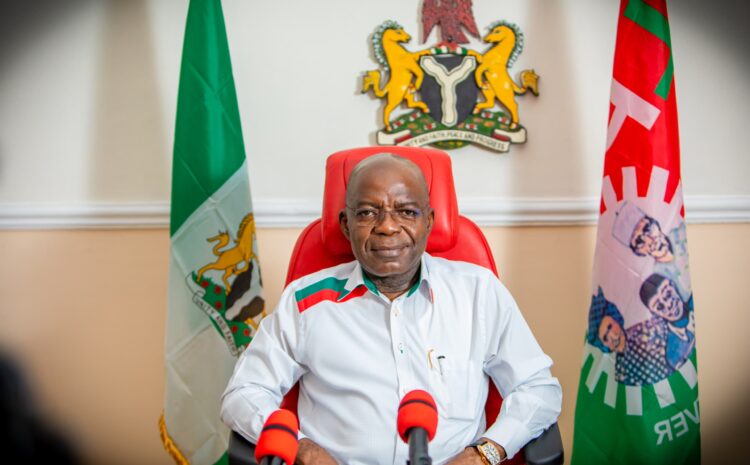
As preparations for the 2027 general elections heat up, Abia State has become a flashpoint of political tension, with a showdown emerging between incumbent Governor Alex Otti and a coalition of former governors led by Orji Uzor Kalu.
The confrontation began with Kalu claiming that Otti’s support was unnecessary for President Bola Tinubu’s victory in Abia, insisting he alone could deliver the state for the APC. Kalu accused Otti of overestimating his political influence, citing alleged assistance he provided during Otti’s 2023 campaign. In response, Otti’s camp dismissed Kalu as a “spent force,” emphasizing that the electorate, not political godfathers, would determine his fate in 2027.
The battle intensified when Otti announced support for a senatorial candidate to challenge Kalu’s third-term bid. In retaliation, Kalu rallied former governors Theodore Orji and Okezie Ikpeazu, forming a political platform called “The Team” aimed at blocking Otti’s re-election.
However, the coalition has faced backlash from residents and stakeholders who praise Otti’s performance in infrastructure, fiscal discipline, education, healthcare, and timely payment of salaries and pensions. Civil society groups, religious leaders, council chairmen, pensioners, and academics have rallied behind the governor, warning against attempts to derail his reform-driven administration.
Former Deputy Speaker Dr. Cosmos Ndukwe cautioned against a “Messiah syndrome,” urging Otti to recognize past administrations’ contributions, while elder statesmen like Kalu Idika Kalu and ex-Senate President Adolphus Wabara stressed that the people, not political cabals, should decide Abia’s future.
With battle lines clearly drawn, the 2027 election in Abia promises a contest between performance-based governance and entrenched political influence, as voters prepare to determine the state’s political direction.






I find it interesting how these former governors are still causing drama in 2027. Cant they just retire peacefully?
I think Otti should step back and let new leaders emerge. The old guard needs to make way for fresh perspectives.
I think Otti should step up his game and show those former governors whos boss! Time for some political drama!
I dont understand why people are still supporting these former governors. Otti seems like a better option to me.
I dont get why they cant just work together for the betterment of Abia. Politics, man 🙄.
I think Otti should step up and show hes a force to be reckoned with! Lets see some real political drama unfold.
I cant believe the drama unfolding in Abia! Who do you think will come out on top in this political showdown? Lets discuss!
Is it just me, or does Otti seem like the wildcard in this political drama? Cant wait to see how this clash unfolds!
I dont get why Otti is causing such a stir. Let them clash, its entertaining politics! 🍿👀 #AbiaPolitics #2027Showdown
I think Otti should stand his ground and shake things up in Abia! Time for some fresh perspectives. Lets see how it unfolds.
I think Otti should step up his game and show these former governors whos boss in Abia 2027! Time for some political fireworks! 🔥
I think the clash between former governors and Otti in Abia is just political drama. Cant they focus on real issues?
Could this clash be a power struggle or a battle for the peoples interests? Intriguing times ahead in Abia politics!
Wow, the drama in Abia is heating up! Who do you think will come out on top in this clash of former governors?