
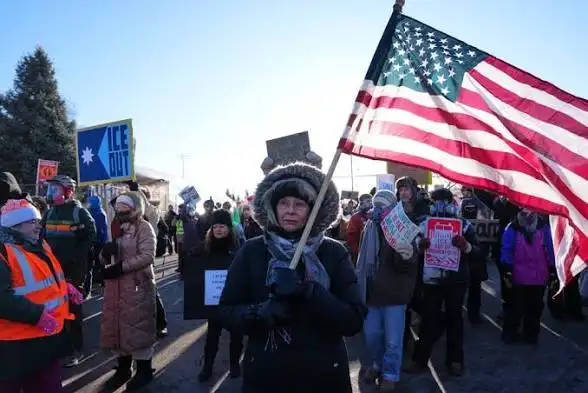
Political tensions in the United States have intensified as widespread protests focus on government decisions related to war policies and economic management across the country today. Demonstrators are voicing concerns about rising living costs and perceived lack of accountability among leaders. Observers note the scale reflects deep divisions shaping national debate and public sentiment nationwide at present time.
Protests have taken place in major cities including Washington New York Los Angeles and Chicago where crowds gathered in large numbers carrying banners and chanting messages directed at policymakers. Participants describe frustration with inflation employment uncertainty and widening inequality affecting households across regions. Authorities increased security presence while emphasizing peaceful assembly rights during events nationwide in recent days.
Political analysts say the demonstrations highlight growing polarization within the United States as citizens express sharply different views on foreign policy priorities and domestic economic direction in current climate. Some groups argue for reduced international involvement while others support maintaining strong global commitments for security and alliances. These differences are shaping political discourse and influencing voter expectations nationwide.
Organizers behind the protests have worked to coordinate messaging that connects economic concerns with foreign policy decisions emphasizing how government actions abroad can affect domestic conditions for many citizens across the nation. Labor unions student groups and advocacy organizations have joined efforts creating a broad coalition that reflects diverse interests and shared grievances among participants in cities nationwide.
Government officials have responded with mixed messages acknowledging the right to protest while defending policy decisions as necessary for national security and economic resilience in a complex global environment. Some leaders have indicated willingness to engage in dialogue with protest organizers while others stress maintaining order and institutional continuity during periods of heightened tension across the country today.
Public opinion surveys suggest that economic pressures including inflation and housing costs are central drivers of dissatisfaction alongside concerns about transparency and trust in political institutions across different demographic groups in the United States. Experts believe sustained demonstrations could influence legislative agendas and shape electoral debates as parties respond to shifting public sentiment and demands for policy adjustments.
As protests continue observers are watching whether the movement will translate into concrete policy ces or remain a reflection of public frustration in a deeply divided political landscape across the United States. While immediate outcomes are uncertain the scale of mobilization indicates a significant moment that may redefine engagement between citizens and government institutions in the coming period.





Leave a comment