
By midweek in Abuja, political tension quietly simmers beneath everyday routines. Analysts and observers are increasingly focused not on campaigns yet to begin, but on the tone already shaping Nigeria’s path to 2027.
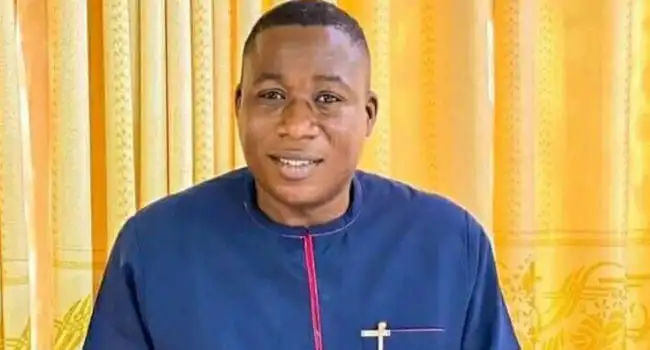
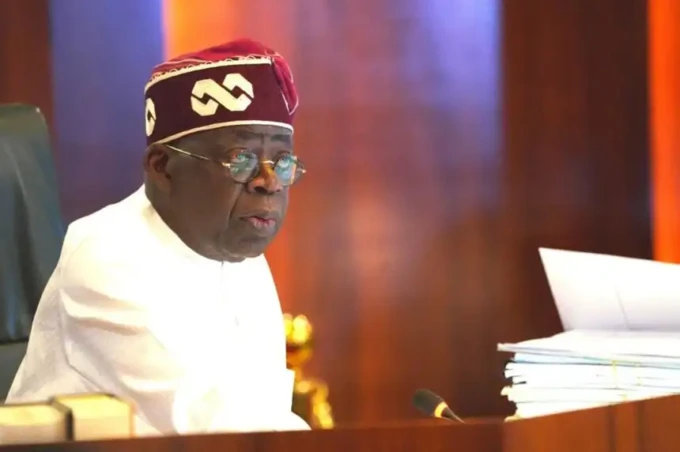
At the centre of the conversation is Sunday Adeyemo, whose recent remarks warning opposition figures against campaigning in the South West have stirred nationwide reactions. In a viral video, he cautioned supporters of Atiku Abubakar and Peter Obi, while openly endorsing Bola Tinubu for a second term.
For governance risk analyst Terna Iorfa, the moment signals soing deeper than political preference. He describes it as “pre election conditioning,” where rhetoric begins to define the boundaries of participation before campaigns officially begin.
Observers note that Igboho’s evolution is striking. Once a vocal critic of authority during periods of insecurity in the South West, his alignment now appears to have shifted following his return to Nigeria in early 2026 after years in exile.
The reactions have been swift and varied. Veteran journalist Dele Momodu urged restraint, emphasizing peaceful political engagement. Activist Omoyele Sowore rejected the warning outright, insisting on his right to campaign anywhere in the country.
Groups such as the Obint Movement have framed the issue as a constitutional matter, stressing that freedom of political participation must be protected across all regions. Commentators including Segun Ben Ajayi and Isaac Asabor warn that such rhetoric risks escalating tensions in an already fragile political environment.
Historical patterns reinforce these concerns. From the 2015 Nigerian general elections through the 2023 Nigerian general elections, issues around voter intimidation and restricted political space have persisted. Declining voter turnout further reflects growing public hesitation, with participation dropping significantly over the years.
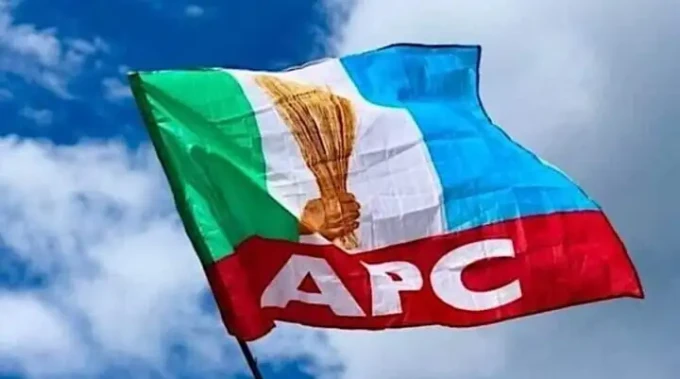
Despite the controversy, silence from key political actors, including the All Progressives Congress, has drawn attention. Analysts argue that in Nigeria’s political climate, what is not said can be just as influential as what is spoken.
As the nation moves c to another election cycle, the central question remains whether Nigeria’s political space is expanding or quietly narrowing before the first campaign rally even begins.



Leave a comment