
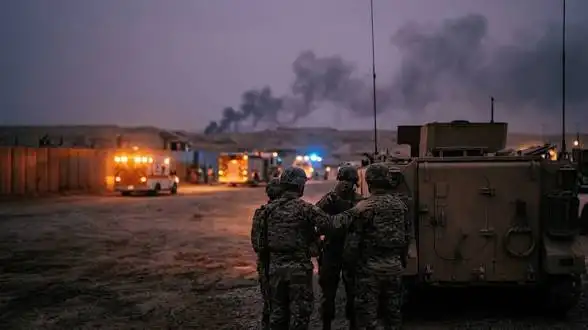
Military analysts across several international research institutions are increasingly warning that current developments in the Middle East could expand beyond their immediate scope, drawing in additional actors and complicating an already fragile security environment. Their assessments highlight the convergence of military activity, political rhetoric, and strategic positioning as factors that may elevate the risk of broader regional involvement.
Experts point to the growing frequency of coordinated operations and retaliatory measures as indicators of a shifting dynamic that could prove difficult to contain. These patterns, they argue, suggest that existing mechanisms for de escalation are under strain, particularly as multiple parties adjust their strategies in response to rapidly cing conditions on the ground and in the air.
Several analysts emphasize that regional alliances and informal partnerships could play a decisive role in shaping the trajectory of the situation. The interconnected nature of these relationships means that actions taken by one state may trigger responses from others, creating a chain reaction that extends well beyond the initial points of tension and complicates diplomatic efforts.
In addition to military considerations, economic factors are also being closely examined for their potential influence on decision making. Energy supply routes, trade flows, and financial markets are all sensitive to developments in the region, and disruptions in any of these areas could have far reaching consequences that amplify existing challenges faced by governments and institutions.
Security specialists have also raised concerns about the potential for miscalculation, noting that periods of heightened alert can increase the likelihood of unintended incidents. Communication breakdowns, misinterpreted signals, or technical errors could all contribute to outcomes that neither side initially intended, further underscoring the importance of maintaining clear lines of contact.
Despite these concerns, some observers note that ongoing diplomatic engagements may still provide opportunities to manage tensions and prevent a broader confrontation. They argue that even limited communication channels can help reduce uncertainty and create space for confidence building measures, though such efforts require sustained commitment from all parties involved.
As the situation continues to evolve, analysts are urging policymakers to carefully balance military objectives with long term regional ility considerations. Their warnings reflect a growing consensus that without deliberate efforts to contain current developments, the potential for wider consequences remains significant across multiple dimensions of the geopolitical landscape.




Leave a comment