
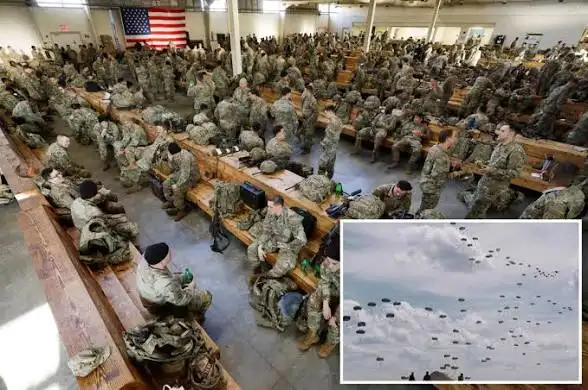
The United States Department of Defense is advancing preparations to deploy elements of the 82nd Airborne Division to the Middle East as part of a broader effort to reinforce regional readiness. Officials familiar with the planning process indicated that the move is intended to provide rapid response capability amid rising tensions and evolving security conditions across several strategic locations.
Military planners have outlined scenarios in which airborne units could be positioned to support contingency operations, protect critical infrastructure, or assist in evacuation missions if necessary. The 82nd Airborne Division, known for its ability to deploy quickly, is often selected for missions requiring immediate presence and operational flexibility in complex and uncertain environments.
Defense sources suggested that the potential deployment would involve a limited number of personnel, aligning with a strategy designed to avoid large scale troop commitments while still maintaining a credible deterrent posture. The approach reflects ongoing efforts to balance military readiness with broader diplomatic objectives as policymakers assess the trajectory of regional developments carefully.
Officials in Washington emphasized that no final decision has been publicly confirmed, but preparations are proceeding to ensure readiness if authorization is granted. Internal discussions have focused on logistics, coordination with allied forces, and the identification of potential staging areas that would support rapid mobilization without creating unnecessary escalation signals.
Security analysts noted that such deployments are often used to reassure allies and signal commitment without directly engaging in active combat operations. The presence of airborne forces can enhance response options and provide strategic flexibility, particularly in situations where conditions on the ground may shift rapidly due to unforeseen developments.
Regional governments are closely monitoring the situation, with some expressing support for measures aimed at maintaining ility, while others remain cautious about increased foreign military presence. Diplomatic channels continue to operate alongside military planning, reflecting the dual track approach that has characterized recent policy responses to ongoing tensions.
As preparations continue, attention remains focused on whether the deployment will ultimately proceed and what role these forces might play if they are positioned in the region. Observers expect further clarity to emerge as policymakers weigh risks, strategic objectives, and the potential impact on an already sensitive geopolitical landscape.




Leave a comment