
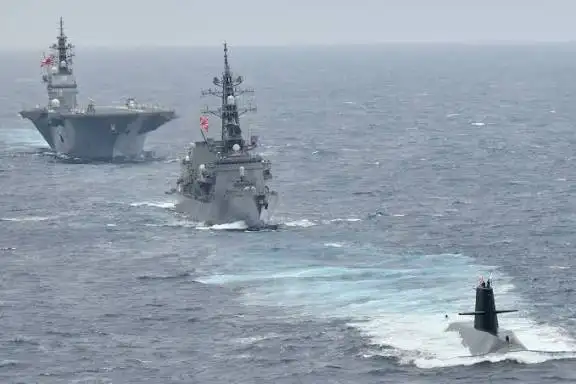
The Philippines, the United States and Japan have conducted joint naval exercises in the South China Sea, reinforcing trilateral security cooperation amid rising maritime tensions in the region. Defense officials said the coordinated drills were designed to strengthen interoperability, improve communication systems and enhance readiness among allied forces operating in contested waters.
The exercises included coordinated patrols, maritime domain awareness operations and joint maneuvering designed to test response capabilities in complex scenarios. Philippine defense authorities emphasized that the drills were defensive in nature and aimed at protecting national sovereignty and ensuring safe navigation through critical sea lanes. The South China Sea remains one of the world most strategically significant waterways, carrying a substantial share of global trade and energy shipments.
The United States reaffirmed its commitment to supporting its regional allies and maintaining freedom of navigation in accordance with international law. American officials noted that the exercises reflect longstanding treaty obligations and shared interests in preserving ility in the Indo Pacific. Japan, which has steadily expanded its security partnerships in recent years, described the drills as part of efforts to promote a free and open maritime order.
The joint operations come against a backdrop of ongoing disputes over territorial claims involving several Southeast Asian nations and China. Beijing has frequently criticized multinational exercises in the area, arguing that they contribute to militarization and heighten tensions. However, Manila has maintained that enhanced cooperation with partners is essential to safeguarding its maritime rights and ensuring regional balance.
Security analysts observe that trilateral drills such as these signal deeper strategic alignment among the three nations. In recent years, defense ties between the Philippines and the United States have strengthened through expanded base access agreements and increased joint training activities. Japan has also played a growing role in regional security through capacity building initiatives and defense equipment transfers to Southeast Asian partners.
The timing of the exercises reflects broader geopolitical dynamics, as countries across Asia seek to navigate intensifying competition among major powers. Maritime incidents, including confrontations between coast guard and naval vessels, have underscored the fragility of peace in disputed waters. By conducting coordinated drills, the Philippines, the United States and Japan aim to deter potential escalation while demonstrating collective resolve.
Regional observers note that sustained dialogue alongside military preparedness will be crucial in preventing misunderstandings at sea. While the exercises are unlikely to immediately alter the strategic balance, they reinforce a pattern of c cooperation among like minded states committed to maintaining maritime ility.
As tensions continue to shape the security environment in the South China Sea, the trilateral partnership is expected to remain a key pillar of regional defense coordination. Officials from all three countries indicated that further joint activities are planned as part of ongoing efforts to bolster cooperation and uphold international maritime norms.











Leave a comment