
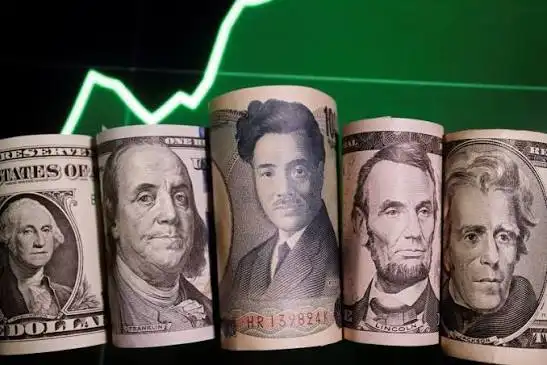
Several Asian currencies gained ground against the United States dollar as concerns over tariff policy weighed on the greenback, prompting investors to adjust positions across foreign exce markets. Traders reported broad based buying of regional currencies amid shifting expectations for trade dynamics.
The dollar’s retreat followed renewed uncertainty surrounding United States trade measures, which have introduced questions about growth prospects and capital flows. Currency strategists noted that emerging market assets often respond quickly to ces in global risk appetite and interest rate forecasts.
Currencies including the Japanese yen, South Korean won, and Singapore dollar registered advances during trading sessions. Analysts attributed the moves to a combination of dollar weakness and improved sentiment toward certain regional economies.
Market participants highlighted that trade policy uncertainty can influence cross border investment decisions and export competitiveness. For export oriented Asian economies, clarity in tariff regimes is crucial for planning production and pricing strategies.
Central banks across the region are monitoring exce rate movements closely. While a stronger local currency can help moderate import costs and inflation, it may also present challenges for exporters if appreciation becomes excessive.
Investors also pointed to relative economic resilience in parts of Asia, where domestic demand and policy measures have supported growth. Portfolio inflows into regional equities and bonds contributed to currency gains.
Despite the recent rally, analysts cautioned that foreign exce markets remain highly sensitive to developments in Washington. Any decisive shift in trade policy could quickly alter momentum.
For now, the strengthening of Asian currencies underscores the interconnected nature of global markets. As tariff discussions evolve, foreign exce traders will continue to assess the balance between risk and opportunity across the region.












Leave a comment