
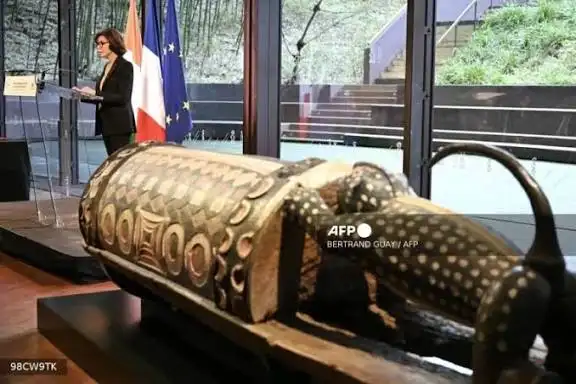
France has formally returned the Djidji Ayokwe artefacts to Cote d Ivoire in a ceremony that officials described as a milestone in cultural cooperation and historical reconciliation. The restitution underscores growing international momentum toward the repatriation of cultural objects acquired during colonial periods.
The Djidji Ayokwe, a ceremonial talking drum of deep spiritual and historical significance to the Atchan people, was taken during the colonial era and held in a French museum collection for decades. Ivorian authorities have long sought its return, arguing that the artefact embos cultural identity and communal memory.
During the official ceremony, representatives from both governments emphasized the symbolic importance of the transfer. French officials framed the restitution as part of a broader commitment to review the provenance of cultural holdings and strengthen partnerships with African nations. Ivorian leaders described the return as an act of justice that restores an essential element of national heritage.
Cultural experts note that the repatriation process required extensive diplomatic engagement, legal review, and coordination between museum authorities. The artefact is expected to be displayed in Cote d Ivoire under preservation standards designed to ensure its long term protection.
The ceremony also highlighted expanding cooperation in areas such as academic exce, archaeological research, and cultural programming. Officials expressed hope that the restitution would foster renewed trust and collaboration.
Debate over the return of artefacts has intensified in recent years, with several European institutions reassessing the origins of items acquired during colonial expansion. Advocates argue that repatriation strengthens cultural dignity and historical accountability. Critics caution that complex legal and conservation issues require careful handling.
The transfer of the Djidji Ayokwe stands as a tangible gesture within a broader global conversation about heritage and responsibility. As more nations engage in dialogue over contested cultural property, the event may serve as a precedent for future agreements grounded in cooperation and mutual respect.












Leave a comment