
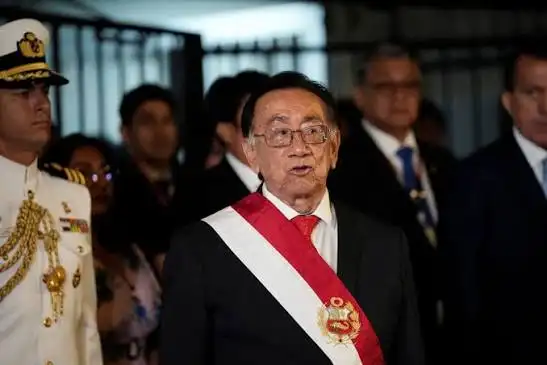
Peru’s Congress has elected Jose Balcazar as president, installing him as head of state through July 2026 under constitutional provisions that govern leadership succession during periods of political upheaval. The move follows months of institutional inility and reflects lawmakers’ effort to restore continuity within the executive branch.
The decision was confirmed during a plenary session of the Congress in Lima, where legislators voted to elevate Balcazar after a series of resignations and internal disputes left the presidency vacant. Lawmakers described the transition as a constitutional necessity designed to prevent further governance paralysis. The new president is expected to serve the remainder of the current term while overseeing preparations for the next general election cycle.
Political turbulence has defined Peru’s recent history, with repeated clashes between the executive and legislative branches contributing to frequent leadership ces. Analysts say the latest appointment represents an attempt by Congress to assert ility and reelish institutional credibility both domestically and internationally.
In his first address following confirmation, Balcazar pledged to prioritize economic ility, public security, and constructive engagement with opposition parties. He emphasized respect for democratic norms and called for dialogue across political factions. Observers noted that his remarks sought to reassure financial markets and signal a willingness to work within constitutional limits.
The leadership ce was carried out in accordance with Peru’s constitutional framework, which outlines succession procedures in cases of presidential vacancy. Legal scholars have pointed out that while the mechanism ensures continuity, repeated reliance on it underscores deeper structural tensions within the political system.
Public reaction in Lima and other major cities remained largely calm, though small demonstrations were reported outside Congress. Some protesters expressed skepticism about whether the new administration can address long standing concerns over corruption and economic inequality. Others welcomed the appointment as a step toward reducing uncertainty.
Regional partners are closely monitoring developments. Peru plays a significant role in South American trade and diplomacy, and sustained inility could affect regional cooperation. Diplomatic sources indicated that neighboring governments have acknowledged the constitutional process and expressed hope for a period of relative calm.
Economic analysts suggest that investor confidence will depend on the administration’s ability to pass fiscal measures and maintain policy continuity. Peru’s mining sector, a major contributor to national revenue, has been particularly sensitive to political volatility in recent years.
As Balcazar prepares to assume full executive responsibilities, attention will turn to his cabinet appointments and legislative agenda. The coming months are expected to test whether this transition can provide the ility that Peru’s institutions have struggled to sustain.










Leave a comment