
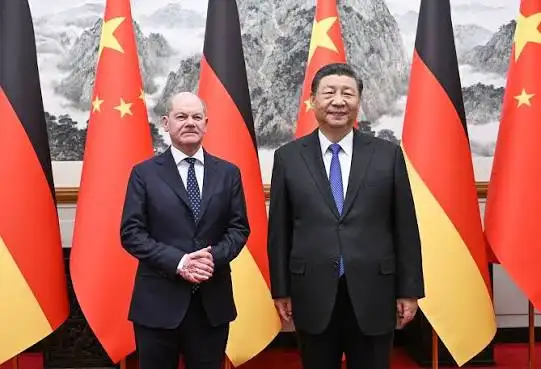
Germany is intensifying efforts to deepen strategic economic cooperation with China as trade tensions with the United States place renewed strain on transatlantic commerce. Officials in Berlin have signalled that safeguarding industrial competitiveness and export ility remains a priority amid evolving tariff policies in Washington.
German leaders have emphasised the importance of pragmatic engagement with China, describing the relationship as essential to Europe’s economic resilience. China remains one of Germany’s largest trading partners, particularly in the automotive, machinery and chemical sectors. Business groups warn that prolonged uncertainty surrounding United States trade measures could disrupt supply chains and dampen investment planning.
At the same time, policymakers are navigating a delicate balance between economic interests and broader geopolitical considerations. The European Union has adopted measures aimed at reducing overdependence in critical technologies, yet Berlin continues to advocate dialogue over confrontation. Officials argue that cooperation in areas such as climate transition, renewable energy and advanced manufacturing can deliver mutual benefit.
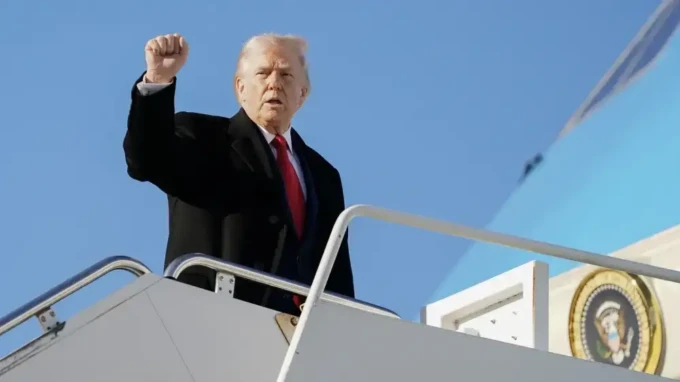
The backdrop to these discussions includes tariff policies advanced under former President Donald Trump, whose approach to trade reshaped global supply chains and prompted retaliatory measures from key partners. Although current negotiations differ in tone, concerns about renewed protectionism have resurfaced in recent months.
German industry representatives have urged the government to secure clearer trade frameworks that protect exporters while preserving open markets. Automotive manufacturers in particular are closely monitoring potential tariff adjustments that could affect both finished vehicles and component imports. Economists caution that escalating trade friction between major economies could slow growth across Europe.
Diplomatic channels between Berlin and Beijing remain active, with senior officials exploring avenues for joint research initiatives and investment partnerships. Analysts note that Germany’s strategy reflects a broader European debate about strategic autonomy, diversification and economic security.
Financial markets reacted cautiously to the developments, with investors assessing whether expanded cooperation with China might mitigate some of the volatility linked to tariff uncertainty. While structural challenges persist, Germany appears committed to maintaining engagement as a means of protecting its export driven economy.







Leave a comment