
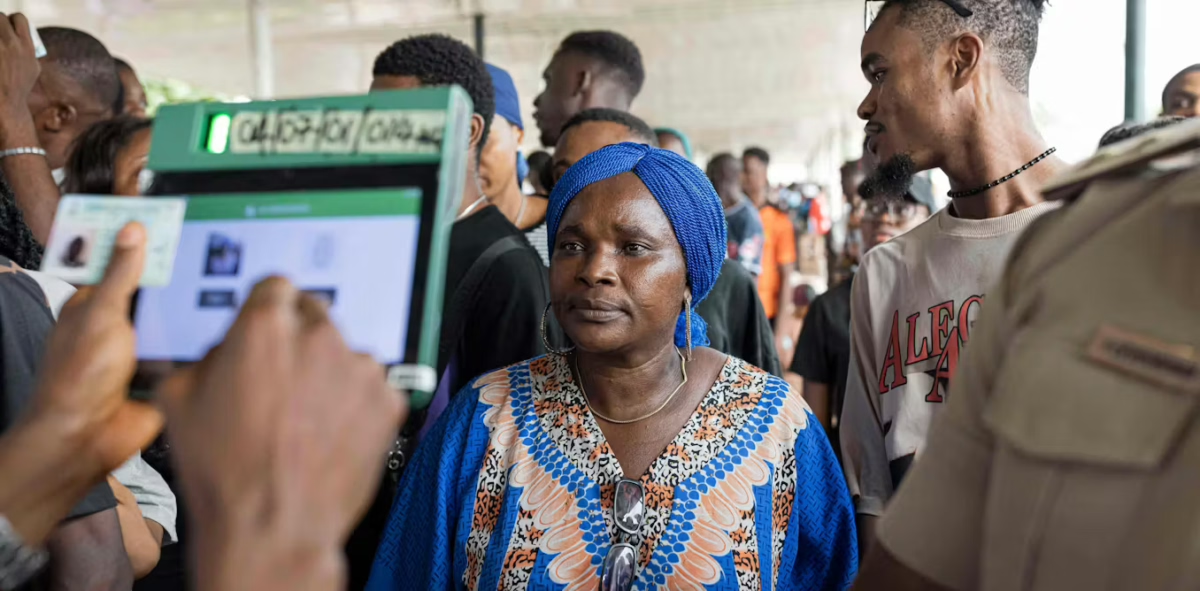
The Executive Secretary of the National Institute of Cultural Orientation, Abiodun Ajiboye, has stated that Nigeria currently lacks the capacity to implement electronic voting or real time transmission of election results due to major infrastructure challenges.
Ajiboye made this known during an interview on ARISE NEWS on Monday, where he argued that electronic voting is unrealistic under Nigeria’s present conditions. According to him, the country cannot afford the financial and technical demands required to sustain such a system.
He explained that electronic transmission of results is tied to the voting process itself, stressing that Nigeria still conducts elections largely through manual voting and collation. Ajiboye questioned how results could realistically be transmitted in real time when voting and counting are done manually at polling units.
Raising concerns about infrastructure, he asked whether telecom operators have the capacity to support nationwide electronic transmission and whether the country has sufficient electricity to power such an exercise. He also recalled that during the last general election, the Independent National Electoral Commission server was reportedly ed more than a million times, warning that increased reliance on electronic systems could expose elections to cyber threats.
Ajiboye maintained that manual voting remains central to Nigeria’s electoral process, noting that votes are counted at polling units in the presence of party agents who sign result sheets. These results, he said, can then be scanned and transmitted without risking the integrity of the entire process.
He insisted that pushing for electronic voting at this stage could disenfranchise rural communities that lack electricity and reliable network coverage. According to him, even developed countries like the United States do not conduct real time electronic transmission of results.
Beyond electoral issues, Ajiboye also highlighted the mandate of NICO, stressing the importance of cultural identity to national development. He said the institute focuses on cultural orientation, public lectures, and training programs aimed at building cultural pride among Nigerians, adding that plans are underway to elish a Nigerian Academy for Cultural Stus in Ogbomoso.








Leave a comment