
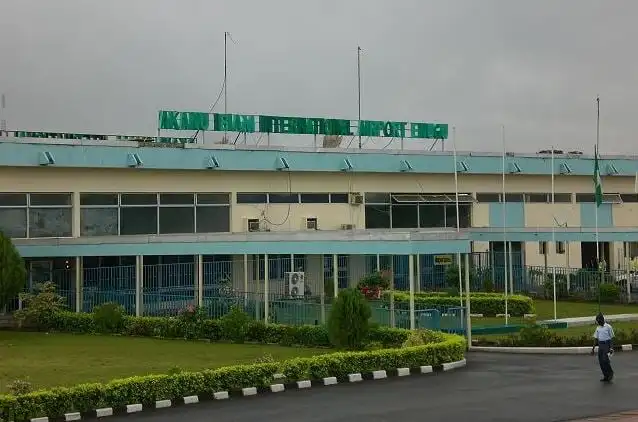
Following the Federal Government’s decision to concession Akanu Ibiam International Airport, Enugu, aviation stakeholders have raised serious concerns over the process and transparency of the deal. The Ministry of Aviation and Aerospace Development had announced last week that Minister Festus Keyamo signed the concession agreement with Aero Alliance, describing it as a milestone in modernizing Nigeria’s aviation infrastructure through public-private partnerships.
While the minister clarified that the concession period is 30 years, industry experts and unions argue the move was poorly executed. Retired aviation analyst Group Captain John Ojikutu suggested a maximum concession period of 20 years and emphasized that Enugu Airport should not have been concessioned in isolation. “Each international airport should be concessioned alongside at least four domestic airports. Government must assess profitability and ensure resources are optimally utilized,” Ojikutu said.
Conversely, Chris Aligbe, CEO of Belujane Konzult, defended the 30-year term, stressing that the focus should be on the financial and operational terms of the agreement rather than its duration.
Unions representing aviation staff, including ATSSSAN, NUATE, and ANAP, have rejected the concession, citing exclusion from the negotiation process. In a letter to Minister Keyamo, the unions stated, “Workers’ representatives in the concession committee were effectively sidelined, and no agreement addressing labor issues was signed. The process lacks transparency and has caused unrest among FAAN staff nationwide.” They called on the minister to reverse the deal and ensure proper consultation before proceeding.
The controversy underscores broader concerns over Nigeria’s airport concession program, highlighting the need for transparent, inclusive processes that balance private investment with public and labor interests. Aviation stakeholders continue to demand clarity on how concessionaires were selected and how operations will be managed under the public-private partnership framework.










I think the lack of transparency in the Enugu Airport concession is a major red flag. Aviation stakeholders have every right to be concerned.
I dont understand why the government cant be more transparent. Its frustrating for all stakeholders involved in the Enugu Airport issue.
I dont understand why the government cant be more transparent with the airport concession. It just doesnt make sense.
I find it shocking that theres still a lack of transparency in aviation deals. When will accountability become a priority?
Is the lack of transparency a valid reason for rejecting the airport concession? What are your thoughts on this?
I cant believe the lack of transparency in the Enugu Airport concession! Its time for the stakeholders to demand more accountability.
I dont understand why the government cant just be transparent about the airport concession. Its not rocket science, just be honest!
I believe transparency is crucial in airport concessions. Without it, trust is compromised. Stakeholders deserve better communication.