
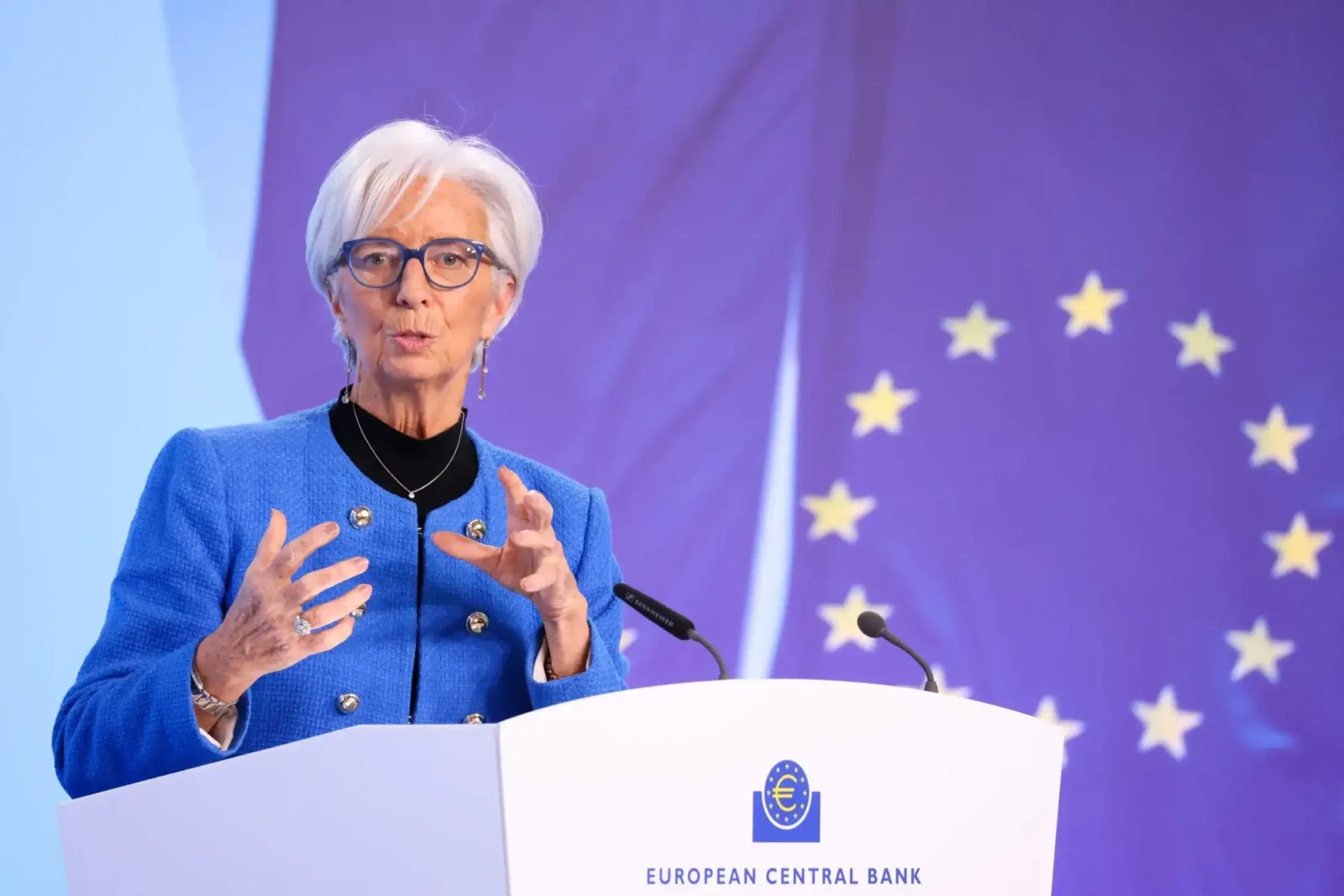
European Central Bank President Christine Lagarde delivered an unexpected message to Europe’s harshest critics this week. Speaking at the World Economic Forum in Davos, she suggested that recent s on Europe from across the Atlantic may actually serve a useful purpose.
Asked whether transatlantic relations had been permanently damaged after days of sharp remarks from United States President Donald Trump and senior members of his administration, Lagarde acknowledged the intensity of the criticism. She said Europe had endured a great deal of bashing in recent days, but argued that the experience had helped sharpen the continent’s sense of urgency.
According to Lagarde, the pressure has forced Europe to recognize the need to become more focused, particularly in the areas of innovation and productivity. Rather than responding defensively, she suggested that Europe should take the criticism as a signal to accelerate reforms and strengthen its economic foundations.
Her comments followed a tense week at the Davos summit. Trump publicly stated that Europe was not moving in the right direction, while United States Treasury Secretary Scott Bessent dismissed Denmark as irrelevant. Commerce Secretary Howard Lutnick also reportedly lectured European officials and business leaders during a private dinner. The exce was so heated that Lagarde, who was present, is said to have left the event in protest.
Despite the friction, Lagarde struck a hopeful tone about the long term relationship between Europe and the United States. She emphasized her strong belief that people on both sides of the Atlantic share deeply rooted values and ultimately need one another. She spoke candidly about the importance of looking beyond political disputes and focusing on ordinary citizens.
Lagarde said she has great trust in the American people and confidence that shared values would prevail in the end. She framed the relationship as one grounded not only in economics and politics but also in mutual respect and common principles.
Meanwhile, European leaders spent the week trying to determine how to respond to a more confrontational United States administration. That effort included a late night summit where leaders discussed potential countermeasures should Washington follow through on future threats. Trump recently stepped back from imposing severe tariffs on European countries that opposed his push to annex Greenland, but concerns remain about what actions could come next.
Lagarde’s remarks suggested that Europe should view the current strain not as a sign of decline, but as a moment of reckoning. In her view, external pressure may be exactly what the continent needs to refocus, adapt, and emerge stronger in an increasingly competitive global economy.











I agree with Lagarde! Criticism can be a catalyst for growth. Lets embrace it and evolve. Whos with me? 🌟
I disagree with Lagarde. Critics shouldnt be thanked for pressuring Europe. We should strive for improvement without external influence.
I dont know about you guys, but I think Lagarde has a point! Criticism can be a good motivator sometimes. Whos with me?
I disagree, pressure shouldnt be necessary for ce. Europe should strive for self-improvement without external criticism. Self-motivation is key.