
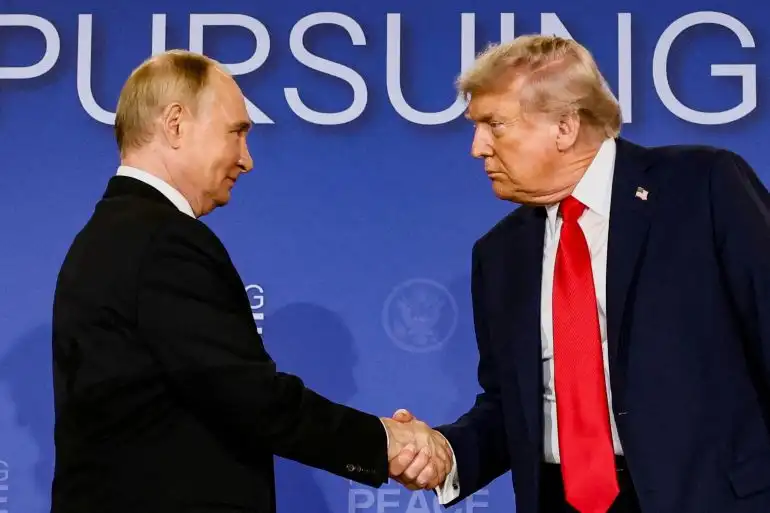
As the world watches with cautious hope, Russia has announced fresh security talks with the United States and Ukraine in Abu Dhabi. Yet behind the promise of dialogue lies a stark warning from Moscow: lasting peace will remain impossible unless the question of territory is settled. The announcement followed an intense late night meeting between Russian President Vladimir Putin and three American envoys.
The discussions stretched for hours and were described by Kremlin officials as deep, direct and unusually frank. Despite the seriousness of the talks, Russian officials avoided any claim of a major breakthrough, signaling that the road to peace remains long and uncertain. Russia confirmed that its delegation to the upcoming three way security talks will be led by Admiral Igor Kostyukov, while economic discussions will be handled separately by investment envoy Kirill Dmitriev and American representative Steve Witkoff.
These parallel tracks highlight how the conflict has evolved beyond the battlefield into political and economic dimensions that are equally difficult to resolve. At the center of Russia’s position is one core issue: territory. Kremlin aide Yuri Ushakov revealed that Putin made it clear during the talks that without resolving territorial questions based on an earlier formula agreed in Anchorage, there can be no hope for a le and lasting settlement.
While Russia insists it remains sincerely interested in a diplomatic solution, it also made clear that military operations will continue until its objectives are achieved. Meanwhile, Ukraine continues to endure one of the harshest winters of the war. Russian missile and drone strikes have targeted energy infrastructure, leaving hundreds of thousands of people without electricity or heating in freezing temperatures.
For Kyiv, these s are proof that Moscow’s commitment to peace is questionable. Russia, however, rejects this accusation and argues that its advances have come at significant cost. On the American side, the talks included not only experienced diplomats but also new participants in the peace process. Alongside Steve Witkoff and Jared Kushner, a newly appointed adviser joined the discussions as part of a broader initiative aimed at resolving global conflicts.
The talks are part of a wider effort by the United States to end what has become the deadliest conflict in Europe in decades. President Donald Trump has publicly urged both sides to reach an agreement, warning that failure to do so would be a grave mistake. American officials have suggested that months of negotiations have narrowed the dispute to a single critical issue, widely understood to be territory.
This issue remains deeply contentious. Russia demands that Ukraine relinquish significant portions of eastern territory and abandon its ambition to join NATO. Ukraine has firmly rejected these demands, refusing to surrender land it has defended at enormous human and military cost. President Volodymyr Zelenskiy recently stated that while security guarantees for Ukraine have been finalized, the territorial question remains unresolved. As preparations continue for the Abu Dhabi talks, both sides acknowledge the efforts of the United States in bringing Russia and Ukraine to the negotiating table.
Yet beneath diplomatic language lies a harsh reality: peace is not just a matter of signing agreements but of confronting painful compromises that neither side is fully ready to accept. The coming days may determine whether the conflict moves c to resolution or sinks deeper into stalemate. For now, the world stands at a fragile moment where hope and uncertainty exist side by side, and the fate of millions depends on decisions still ing in the balance.






I dont buy it, Russia and the US working together for peace in Ukraine? Sounds too good to be true. What do you think?
I disagree with the articles suggestion that peace in Ukraine is impossible without Russian and American cooperation. What about Ukraines sovereignty?
I cant believe theyre still dancing around the real issues. Lets cut the politics and focus on whats best for Ukraine.
I think the article overlooked the role of other countries in the conflict. Its not just about Russia, the US, and Ukraine!
I think the article makes a valid point about the complexities of achieving peace in Ukraine. Its definitely a tough nut to crack!
I think the article missed the point about Russias true intentions in Ukraine. Theres more to it than just ending the war.
This article misses the point – peace wont come without acknowledging Ukraines sovereignty. Time to wake up, world!